Husker Hort

A Nebraska View of Horticulture


Leave a comment

Preparing Gardens for Fall

Don't forget about the pumpkins. Photo courtesy of Lancaster County Extension

Don’t forget about the pumpkins. Photo courtesy of Lancaster County Extension

The presence of frost usually means that your vegetable garden is either limping toward the finish line or has completed production for the year.  Fall is the perfect time to clean up the vegetable garden and its tools to prepare them for next year.

There are a few more tasks to complete before you put your gardening tools away for the winter.  Before you perform the actual clean-up of the garden, make notes about the year. Record the garden layout, cultivars that worked (or didn’t), and pests or diseases you encountered this past year.  This will help you next spring when it is time to plan the garden and help you to remember what vegetables were in which location for your crop rotation schedule.  The goal is to have a 3 year crop rotation plan.  This is where vegetables from the same plant family are rotated around different locations within the garden.  The objective is to avoid placing those plant families in one particular location for 3 years.

The actual clean-up of the garden is the next step.  Elimination of garden debris, like dead plant material, fruit ‘mummies,’ weeds, and rotting vegetables, can help to reduce disease, weed, and insect problems next year.  Remove and discard disease or insect infested plant material, but do not compost.  Compost piles do not reach high enough temperatures to kill all pathogens, like fungal spores and bacteria.  Discarding or burning the infected plant material will remove the pathogens that could potentially infect next years’ crops.  Removal of weeds with mature seed heads will not only improve the appearance of the garden, but also help remove the seed source for potential weeds in next years’ garden.

Adding organic matter can help improve soil composition.  Incorporating residues from healthy plants can act as a great source of organic matter, which can improve the texture of the soil.  These healthy plants can either be turned or tilled into the soil or tossed into the compost pile.  Organic mulches that were used in the garden, like straw, grass clippings, or even newspaper, can also be tilled into the soil.  Tree leaves are another great source for organic matter for the garden.  Leaves that are picked up with the lawn mower will break down faster once they are worked into the soil because they are chopped into smaller pieces.

Cages and trellises also need some clean up in the fall.  Support structures, like tomato cages or trellises, should be pulled out of the ground, cleaned up, and placed in storage for winter.  If you have had disease issues in the past, like blight in tomatoes, now is also an excellent time to disinfect the cages or trellises to keep them from infecting new plants next year.  A 10% bleach solution, alcohol wipes, rubbing alcohol, or even ready-to-use bleach wipes can be used to disinfect the cages prior to winter storage.

Speaking about putting your garden tools away for winter…it’s time for some end-of-the-year tool maintenance.  Digging tools, like shovels, hoes, pitchforks, and garden rakes, should have excess soil removed from them.  Any rust that is present can be removed using a wire brush and a little bit of elbow grease or an electric drill with a wire brush or sanding attachment. After rust is removed, renew or sharpen the edges and points with a mill file or grinding wheel.  For winter storage, apply a light coating of oil.  Tools can even be stored in a 5 gallon bucket filled with sand and oil.  Inspect the handles of your tools at the end of the season for cracks or splinters.  Replace the handles if necessary.  If the wooden handles are in good condition, they can be sanded and oiled at least once a year.  Use a fine grade sand paper to smooth the surface.  Remove any dust and rub linseed oil into the handle and allow it to soak in.  Keep applying until the oil doesn’t absorb any more.  Wait a half hour, and dry off any oil remaining on the surface.

For more information contact Elizabeth Killinger at elizabeth.killinger@unl.edu, 308-385-5088, on Facebook, Twitter, her blog at https://huskerhort.wordpress.com/, or visit the University of Nebraska-Lincoln Extension website: hall.unl.edu.


1 Comment

Fall Invaders

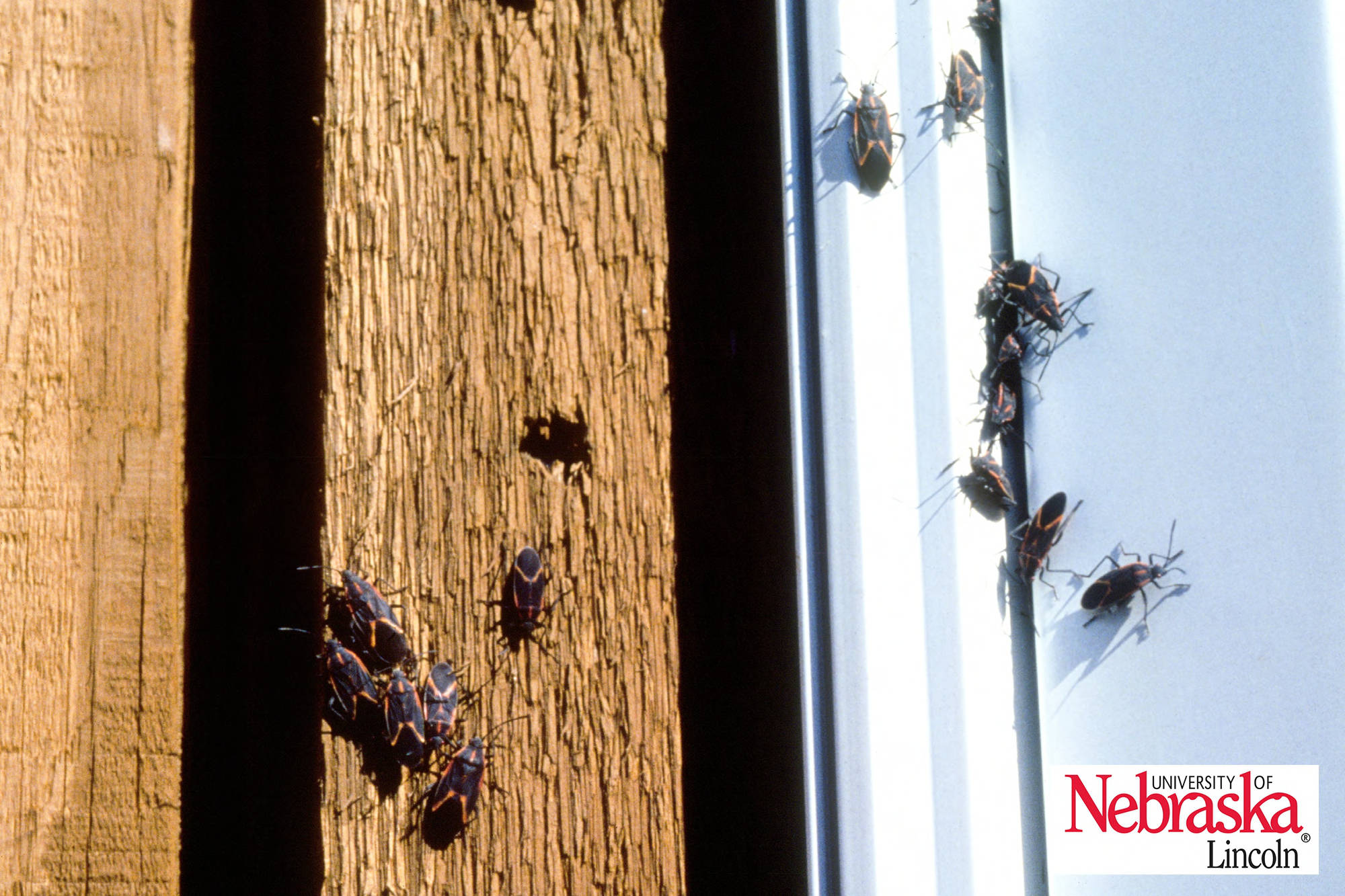
Boxelder Bugs around a window.

Boxelder Bugs around a window.

Warm days and cool nights signal that fall is here.  The pumpkins are ready to be picked, the leaves will soon be in full color display and the wolf spiders and crickets will start migrating into the home.  Not exactly what you had in mind for a peaceful fall?  Find out how to start preparing now to keep these invaders from making themselves at home in your home.

When the temperatures start dipping, the pests start coming in.  Nobody really wants to spend the winter outdoors and insects are no different.  Some of the more common nuisance pests, or occasional invaders, include boxelder bugs, multicolored Asian Lady Beetles, millipedes, and crickets.  These pests don’t do any harm inside the home; they are just looking for a cozy place to spend the winter.

Proper identification of the insect will assure the proper control method.  Boxelder bugs are black and orange true ‘bugs’ that can be found in large numbers around foundations sunning themselves or trying to find their way inside. Multicolored Asian Lady Beetles are the orange ‘lady bugs’ with black spots.  Their distinct smell and ability to bite makes them even more of a nuisance once inside the home.  Millipedes are often misidentified as ‘wire worms.’  These skinny, brown critters have two legs per body segment and will curl up when disturbed.  Crickets hop their way into homes and provide ‘music’ in the night with their chirping.  Commonly it’s the black field cricket that migrates inside, but there are others that follow right behind.

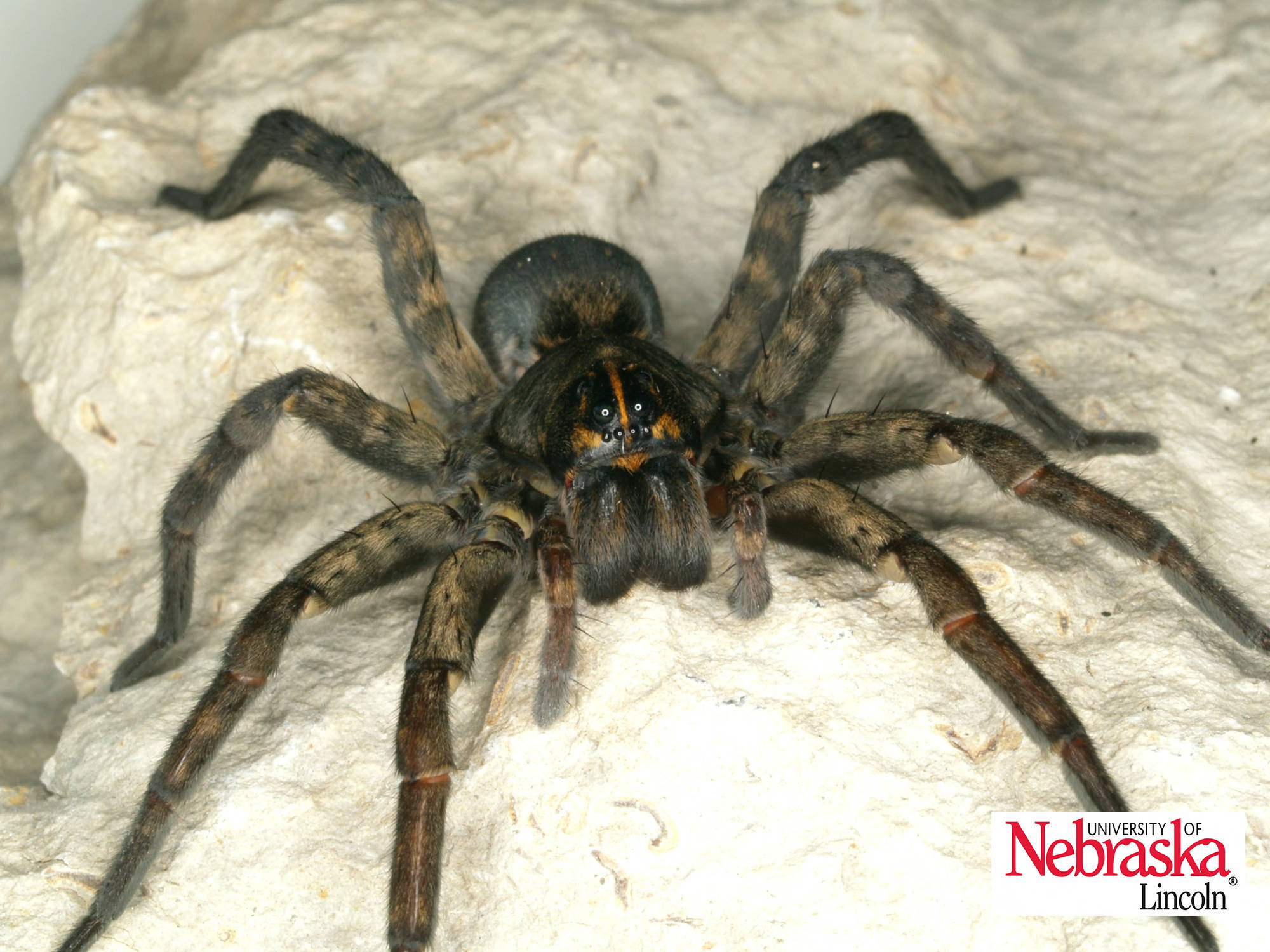
Wolf Spider

Wolf Spider

Wolf spiders may look scary, but they are more bark than bite.  These large, hairy spiders can be found both outdoors and occasionally inside the home.  They are not poisonous nor do they want to disturb people.  They are hunting spiders, so they don’t spin a web or a trap, but prefer to chase down their prey.  They often find their way into homes in the fall following their favorite food source the cricket.

The saying “an ounce of prevention is worth a pound of cure” has never been more true.  Discouraging occasional invaders from entering the house is going to take a little work, but it will be worth it in the long run.  Start by finding and sealing up any cracks or spaces they could enter through with silicone caulk or expanding foam.  Make sure that window screens are in good repair and that doors are tight fitting.  Also remove any dead plant debris from window wells.

Pests can be discouraged from entering the house in a number of ways.  The most common way is by applying an outdoor perimeter insecticide treatment.  These insecticides are labeled for various pests and often times have residual effects to help protect the house for longer.  Read and follow the label instructions on how and where these products should be applied.  Ideally, try to apply these insecticides out from the foundation about five to ten feet around the perimeter of the home. The insecticides will help to decrease the numbers of pests that make it inside the house, but don’t expect it to stop all of them.

Monitor the home regularly to see what pests have made their way inside.  Glue boards are sticky boards used to catch and hold pests as they try to move throughout the home.  Be sure to use sticky boards in locations where non-target animals, like pets, won’t get stuck in them.  If something other than the target pest does happen to get ‘caught’ in the trap, use an oily material, like vegetable or mineral oil, to dissolve the sticky substance on the trap.  When properly placed, these traps will allow you to see which pests are inside the home and their approximate numbers.

Once pests are found inside the home, there are a few techniques that you can use. The handy broom and dust pan or the vacuum are two techniques; they are also very environmentally friendly and very cost effective.  Be careful when selecting insecticides for use inside the home.  Read and follow instructions carefully as many of these products have to come into contact with the insect themselves and don’t offer much residual protection.

With a little prevention and monitoring you can ensure that you are sharing your home with wanted house guests this fall and winter.

For more information contact Elizabeth Killinger at elizabeth.killinger@unl.edu, 308-385-5088, on Facebook, Twitter, her blog at https://huskerhort.wordpress.com/, or visit the University of Nebraska-Lincoln Extension website: hall.unl.edu.