Husker Hort

A Nebraska View of Horticulture


Leave a comment

Live Christmas Trees are for the Birds

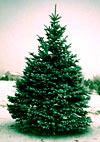
bluesprucecjlgLive Christmas trees add an unmistakable ambiance to the holidays.  Now that the holidays are over, the time has come to let your tree perform a different task.  Get good use out of your live Christmas tree for a while longer.  Feeding birds has become a very popular pastime that can be done year round.  There are three things to remember for bird feeding success: location, providing the correct feed and feeder for the bird you want to attract, and maintaining a constant availability.

There are a few steps you should take with your Christmas tree before you stick it outdoors for the birds.  Remove all decorations, lights, and try to remove as much of the tinsel, if not all, if possible.  The best location for the tree once outdoors is on the south or east side of the house.  This will provide shelter from the harsh north and west winter winds.  Be sure the tree is secure in its new location by setting the stump in the ground or bucket of damp sand and by attaching the top with twine to nearby buildings or trees.

Christmas trees can create a wonderful backyard habitat.  The tree can provide shelter for the birds by protecting them from the wind and predators.  It can also act as a feed station. For a fun winter project, make your own bird feeders.  Popcorn, cranberry, and raisin strings are not only festive, but they also help to feed the birds.  Popcorn will attract cardinals and finches, while cranberries and raisins attract cedar waxwings and any overwintering robins.  Apples, oranges, leftover bread, and pine cones covered with peanut butter and rolled in birdseed also make great feeders.

The saying that works with real estate also works for bird feeders– location, location, location.  Most birds prefer to feed when they are protected from the strong winds and where they can have areas with protective cover and perching sites.  Trees and shrubs nearby offer excellent perching sites while evergreens provide great cover for birds to hide.

The types of feeders and the feed you offer will determine the types of birds that you will have visiting.  Birds tend to be pretty picky with the type of feed and feeder that they prefer.  Goldfinches are easy to attract if you use niger thistle seed in a clear tube-type feeder.  Woodpeckers and nuthatches are fond of suet.  Suet is a combination of animal fat, seeds, and other ingredients that attracts insect eating birds.  It offers a quick source of energy for birds.  Suet feeders are usually a plastic-coated wire cage.  There are a wide variety of feeder types available at most home and garden centers or you can make your own.  Pick a feeder that you enjoy looking at, is easy to fill, fits the type of bird you want to attract, and fits within your price range.

In winter birds rely on you and what you have to offer.  Once you decide to start feeding the birds, it should be done consistently.  Feeding the birds in the winter makes them reliant on you for part of their diet.  Forgetting to feed the birds during a severe cold period or storm could mean that they could starve to death before they find another food source.

When your live Christmas tree has fed all the neighborhood birds be sure to take it to your local recycling areas where it can be made into habitat or useful mulch.  Grand Island had three locations; ACE Hardware at the west end of the parking lot, the north side Skagway south parking lot, and the Conestoga Mall just north of Red Lobster.  Trees can be dropped off at these locations until January 5th and will be chipped into mulch.

Upcoming Programs:

Nebraska Extension Master Gardener Program- Two training sessions will be held at the UNL Extension in Hall County meeting rooms in Grand Island NE.  Session 1: Tuesday evenings, February 11 through March 25, 6:00 to 9:00 PM.  Session 2: March 17, 19, 21, 24, 26, and 28 from 9:00 a.m. to 4:00 p.m.  Please contact Elizabeth Killinger, 308-385-5088, with any questions about the program.  Registrations are due prior to January 7 with the session you are interested in attending.  More information, updated schedules, and an application can be found at http://hall.unl.edu

For more information contact Elizabeth Killinger at elizabeth.killinger@unl.edu, 308-385-5088, on Facebook, Twitter, her blog at https://huskerhort.wordpress.com/, or visit the University of Nebraska-Lincoln Extension website: hall.unl.edu.



Leave a comment

Central Nebraska Extension Master Gardener Program

NEMasterGardener-logo-m-sqDo you enjoy plants and gardening?  Looking to learn more and hone your skills but don’t know where to go?  The Master Gardener program will educate you on many aspects of horticulture, allow you to test your knowledge and skills, all while serving your local community.

The Nebraska Extension Master Gardener program is a horticulture related volunteer training program based in many counties throughout the state.  It has been part of University of Nebraska- Lincoln (UNL) Extension since 1976.  Master Gardener volunteers are trained by UNL Extension faculty and staff. They contribute time as volunteers working with their local Extension office to provide horticulture-related information to their community. Participants are required to complete 40 hours of training and 40 hours of volunteer service during the initial year of their involvement in the program. Master Gardener volunteers retain their certification through annual training and volunteering.

Volunteer hours can be completed through various activities.  These activities could include: planting and maintaining demonstration gardens, collecting data on research projects, helping with county and state fair activities, speaking to community groups, leading garden tours, collecting plant samples, answering phone questions, teaching youth programs, or whatever sparks your interest and utilizes your talents.

Educational topics will cover a wide range of horticultural issues.  Topics that have been covered in previous training sessions include: native plants for water conservation, an in-depth look at fertilizers, turfgrass and related insects, beneficial pollinating insects and vegetable garden pests, tree and shrub pruning, pesticide safety and non-chemical pest control techniques, and small fruits and tree fruit basics.  The content of the topics is focused on the home gardener, but those employed in the green industry are also welcome.

Are you interested in becoming a Master Gardener? University of Nebraska-Lincoln Extension in Hall County will be offering two Master Gardener training sessions at the Hall County Extension Office meeting rooms in Grand Island. The first session will offer six trainings on Tuesday evenings February 11 through March 25, 6:00 to 9:00 p.m.  The second session will be held March 17, 19, 21, 24, 26, and 28 during the day from 9:00-12:00 a.m. and from 1:00-4:00 p.m.  Individuals who wish to become new Master Gardeners the fee is $160.  With that fee the Master Gardener interns receive a large resource notebook, an integrated turfgrass management book, a short-sleeved t-shirt, and a name tag.  The fee will also help fund handout materials, speaker travel expenses, room rental, and other costs associated with the training program.  For returning Master Gardeners, the fee is $15 to help fund costs associated with the training program.  The ProHort program is for green industry professionals and has a fee of $325.  ProHort participants will receive a large resource notebook, an integrated turfgrass management book, and 40 hours of education.  The general public is also welcome to attend sessions for a fee of $5 per person for each training session.  Please contact Elizabeth Killinger, 308-385-5088, prior to January 7 with the Master Gardener training session you are interested in attending.  More information, updated schedules, and a brochure can be found at http://hall.unl.edu


Leave a comment

Avoiding Winter Desiccation

bluesprucecjlgThe holiday season is upon us. We all had our fill of turkey and fixings, Black Friday is finished, and Cyber Monday is just around the corner.  You have worked hard all year to make sure your trees look their best and now is not the time to stop.

Winter is often an overlooked season when it comes to working in the landscape.  Providing supplemental irrigation during the winter months can help sensitive plants make it through the winter a little less stressed and with less winter desiccation injury.

Not all plants are susceptible to winter desiccation.  Winter desiccation happens when the plants’ roots aren’t able to soak up enough water to replace the moisture lost through the leaves.  This often results in plants having areas of yellowish/tan colored leaves come spring.  Woody plants with shallow root systems are usually the hardest hit.  Spruce, fir, pine, arborvitae, yew, Oregon grape-holly (Mahonia), holly, and boxwood are some of the more common evergreen plants that would benefit from supplemental winter irrigation during extended dry seasons.

The plant’s location within the landscape can have an effect on its potential for winter damage.  Plants that receive reflected heat from buildings or walls will be more susceptible to damage.  The reflected heat from the building can warm up the area and plants surrounding it, leading to an increase in moisture lost.  Exposure to north and west winter winds can also have an effect.  Plants that are exposed to the winter winds will often only have desiccation injury on the side that is more open to the winds.

There are a few steps that you can take to prevent winter desiccation.  For starters, make sure that the plants go into winter well watered.  It may be too late for that this year, but it isn’t too late to provide supplemental water this winter.  There are some rules to providing supplemental irrigation in the winter.  Water should only be applied when the daytime air temperatures are above 40 degrees F.  Try to apply the water in the middle of the day and allow it plenty of time to soak into the soil profile before the temperatures drop below freezing.  If it is not given ample time to soak in, there could be a resulting layer of ice on the soil’s surface that could cause some damaging effects on the trees roots and possibly surrounding turf.

Timely applications of an antidesiccant on the most susceptible plants can also help to ease winter desiccation injury.  Antidesiccant products, like wilt-pruf, reduce the amount of moisture that is lost through evergreen foliage.  They coat the needles of the plant with a light weight polymer substance that prevents water from leaving the foliage.  These products usually last about 5 or 6 weeks before they degrade in the sun and elements.  Antidesiccant products are commonly put on newly planted trees, those that are exposed to winter winds, or those that receive reflected heat.  Aim to apply these products beginning around Thanksgiving and reapply throughout the winter.  For best results, antidesiccants should be applied when air temperatures are above freezing so the liquid will dry on the leaf surface.  If you mix and spray antidesiccants yourself, be sure to clean out the sprayer thoroughly immediately after the application.  These products can form a glue-like mass inside the sprayer that will harden in the lining and can clog spray nozzles.  A hot water and soap solution flush will help to prevent damage to the spraying equipment.

As we all know, there isn’t a ‘normal’ season in Nebraska.  Each year brings its own challenges to overcome.  Last year it was the summer drought, before that it was the holiday snow storm, and who could forget the New Year Eve ice storm.  Knowing your climate, plants, and what they require can help you to decide whether or not action needs to be taken.

For more information contact Elizabeth Killinger at elizabeth.killinger@unl.edu, 308-385-5088, on Facebook, Twitter, her blog at https://huskerhort.wordpress.com/, or visit the University of Nebraska-Lincoln Extension website: hall.unl.edu.