
The holiday season is upon us. The decorations are up and the holiday plants are blooming with all of their glory. Some of our favorite holiday plants have a potentially dangerous side and can do more than just add color to our homes. Do you think you know which of your holiday plants are safe and which ones are dangerous?
Amaryllis is beautiful, but its near the top of the list for forgotten poisonous holiday plants. These plants are one of the more poisonous plants that are brought into the home during the holiday season. Amaryllis are often sold as a large bulb. Once these bulbs are watered, they produce long strap like leaves and a flower stalk containing brightly colored, trumpet shaped flowers. The toxic chemical that these plants contain is called alkaloid lycorine, which is an irritant to the gastrointestinal tract. The most toxic part of these plants is the bulb. The other parts of the plants can also be toxic if they are eaten in large quantities.
Kissing under the mistletoe sounds like an innocent holiday ritual, but it also has a dangerous side. Real mistletoe is a common holiday plant that is sold dried in small packages to be hung in homes. The plant has thick, leathery, green leaves and white berries. The plant itself is a parasite-like plant that feeds off other trees. With some species, eating a few of the berries would produce mild gastroenteritis, acute diarrhea, and vomiting. All parts of the plant are considered toxic. Want to rethink kissing under a poisonous, parasitic plant?
Who doesn’t like a plant with a dark green leaf and red berries during the holidays? These common plants could be more toxic than you think. Holly, inkberry (aka winterberry), and yew are three common plants with dark green foliage and red berries. All three are toxic to dogs, cats, and humans too. If you like the look of holly, but without the toxins, try Oregon grape holly, Mahonia. Same leaf shape and glossy leaf as holly, but with blueish purple (non-toxic) berries.
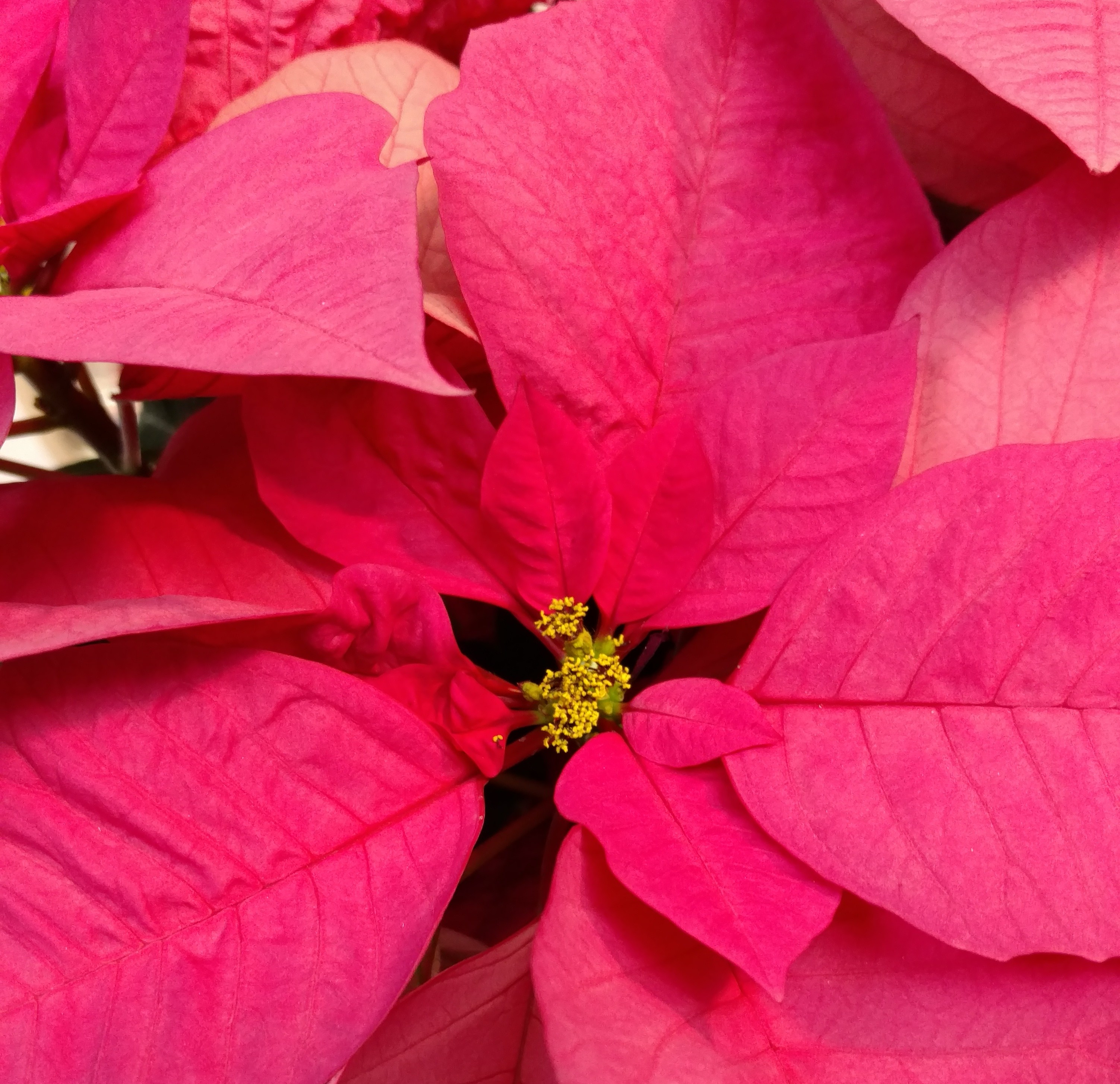
Another holiday plant that has a bad reputation for being extremely poisonous is the poinsettia. Recent research has concluded that they are not considered poisonous. According to the POISINDEX, the primary resource used by most poison control centers, a 50-pound child would have to eat more than 1.25 pounds of colored poinsettia bracts, about 500 to 600, to exceed the experimental dose. There would probably be some stomach upset or vomiting if a few bracts were eaten, but it is not considered toxic. The milky sap from the poinsettia can be a skin irritant and can cause a rash in people who are sensitive.
Looking for some completely safe holiday plants? The Christmas cactus and kalanchoe are two plants that are deemed non-poisonous by the Nebraska Regional Poison Center. The Christmas cactus has flat, fleshy stems that resemble leaf-like pads which are joined to one another in a chain-like pattern. The flowers are usually held at the tips of the stems or in the ‘leaf’ axils and are usually pink to red. The kalanchoe has semi-fleshy leaves and flowers that are held in umbels above the leaves. The flowers come in a wide range of colors including yellow, orange, red, and pink to name a few. Another safe holiday plant is the Norfolk Island Pine. This houseplant has evergreen needles and a fun, umbrella like structure. The worst thing that could happen with this one is getting poked by a needle.
Regardless of the plant, resist the urge to eat them and just admire the perfect holiday plant this season.
Elizabeth Exstrom is the Horticulture Extension Educator with Nebraska Extension in Hall County. For more information, contact Elizabeth on elizabeth.exstrom@unl.edu, her blog on https://huskerhort.com/ or HuskerHort on Facebook and Twitter

 Husker Hort