Husker Hort

A Nebraska View of Horticulture


3 Comments

Variety, cultivar, hybrid, heirloom… what terms mean

Decisions, decisions. Red or yellow? Determinate or indeterminate tomatoes? Hybrids, varieties, or heirloom plants? The answer you get depends on what you want to do with the plant.

There are many choices when it comes to what you put into your garden. The vegetables you select for the garden are there because you or someone in the family likes them, but they should have specific characteristics that make it valuable to have them there in the first place. You should look beyond the bottom dollar price and make your decisions based upon several characteristics.

Variety, cultivar, hybrid, heirloom… what do all of these terms mean? The terms variety and cultivar are often mistakenly used interchangeably. Variety is a naturally occurring variation of individual plants within a species. The distinguishing characteristics are reproducible in offspring. One common example is the thornless honeylocust, Gleditsia triacanthos var. inermus. It is a naturally occurring thornless honeylocust. Cultivar comes from the term ‘cultivated variety.’ These plants are selected through specific hybridization, plant selection, or mutation, to achieve specific characteristics or traits. An example of a cultivar is Penstemon digitalis ‘Husker Red’ or Husker Red penstemon. ‘Husker Red’ was a particular selection of penstemon that was picked for its red foliage and white blooms. Hybrids are crosses between two species or distinct parent lines and can be developed from a series of crosses between parents. Seeds saved from hybrids usually don’t ‘come true from seed’ meaning seeds saved and planted from hybrids won’t yield the exact same fruit as the year before. One of my favorite tomatoes, ‘Sungold,’ is an example of a hybrid. These plants were specifically bred for their size, color, crack and disease resistance. Lastly there are the heirlooms. These plants are varieties that are the result of natural selection that has been in cultivation for 50 years or more.   Seeds saved from heirloom varieties will ‘come true from seed’ and you will have the same plant as the previous year. One of the more popular heirloom tomatoes is the Brandywine. Often these plants may have the best flavor, but they often lack the disease resistance that the hybrids offer.

Why do hybrids often cost more than varieties? The major reason for the price difference between hybrids and standard varieties all comes down to time. The higher price is related to the amount of time that it takes to produce new hybrids. The carefully selected parent plants must be cross-pollinated by hand to produce offspring with the desirable characteristics. Then the seeds from those crosses have to be grown out and the plants have to then be evaluated to ensure that the resulting plants have the right combination of characteristics. The breeder then has to produce enough seeds to sell to meet the demand. Open-pollinated varieties are planted in a field and then Mother Nature does the work moving the pollen around. The fruits are then harvested and the seeds are collected.

Your expectations of the plants can help you decide which type of plant to select. Gardeners who want to harvest seeds from this years’ garden to plant next year, might want to stick with open pollinated varieties or heirlooms. Hybrids offer improved disease resistance and are more adapted to environmental stresses. If you buy fresh seed every year and you want the most productive, least problem prone garden, hybrids are probably the way to go.

With a little background information, hopefully your decisions just got a little easier.

For more information contact Elizabeth Killinger at elizabeth.killinger@unl.edu, 308-385-5088308-385-5088, on Facebook, Twitter, her blog at https://huskerhort.wordpress.com/, or visit the University of Nebraska-Lincoln Extension website: hall.unl.edu.


Leave a comment

2014 Turf Winterkill Outlook

We may have loved the fact that this winter we didn’t have to scoop much snow, but your turf isn’t quite so happy. The open winter may have wreaked havoc on lawn, greenspaces, athletic fields, and golf courses in the area. Find how what to be on the lookout for and how you can help to ensure a healthy green lawn this upcoming season.

In a ‘normal’ winter the turf is usually protected from the extreme conditions. Snow cover helps to not only provide much needed moisture to the thirsty turf, but it also helps to blanket and protect turf from the biting winter winds. This winter, there wasn’t much snow to protect turf and there were definitely the harsh winds.

The lack of snow cover can be a contributing factor to winterkill in turf. Winterkill is a general term that is used to define turf loss during the winter. Winterkill can be caused by a combination of factors including crown hydration, desiccation, low temperatures, ice sheets and snow mold. UNL Turfgrass Specialists were prepared to educate about winterkill, but they weren’t prepared for the extent of damage that they are seeing.

There are a few factors that can play a role in the degree of the damage in the lawn. Low mown turf, like those on golf course greens, tend to be more susceptible to winterkill. Turf that was seeded last fall, had heavy traffic over the winter, and locations exposed to winter winds are also affected by winter damage or winterkill.

Winterkill on turf throws a wrench in all of my previous preemergence herbicide recommendations. Normally, I would recommend dual applications of preemergence herbicide for the most effective control of crabgrass and other weedy grasses in the lawn. The first application is usually applied any time after March 1 with the second application in early June.

This year, wait to apply preemergence applications until after the turf has greened-up. There is no rush to apply the preemergence herbicides now. Make sure that there isn’t any winterkill on your turf before you apply preemergence herbicides. Applications of preemergence herbicides applied as late as mid-April to early May are still effective for our area.

There is one major reason for holding off on applying preemergence herbicides. These products can limit your options when it comes to a lush green lawn yet this spring. If a preemergence herbicide has been applied to the turf prior to overseeding, it can keep the turf seeds from germinating along with the weedy grass seeds.

If your lawn has suffered this winter or been killed by winterkill, there is still time to overseed yet this spring. Overseeding or renovating lawns can help to fill in a sparsely growing lawn or one suffering from winterkill. If you decide to overseed, there are a few rules to follow. Kentucky bluegrass can be overseeded throughout the month of April at a rate of .75 to 1 pound of seed per 1,000 square feet. Tall fescue lawns that have been thinned can be overseeded at a rate of 4 to 6 pounds of seed per 1,000 square feet starting April 15 through June 15th. If renovation of the entire lawn is chosen, use the full seeding rate. Kentucky bluegrass’s full rate is 3 to 4 pounds of seed per 1,000 square feet. Tall fescue seeding rate is 4 to 6 pounds of seed per 1,000 square feet.

Waiting to apply preemergence herbicides may be tough to do, but it can save you a headache in the long run.

For more information contact Elizabeth Killinger at elizabeth.killinger@unl.edu, 308-385-5088308-385-5088, on Facebook, Twitter, her blog at https://huskerhort.wordpress.com/, or visit the University of Nebraska-Lincoln Extension website: hall.unl.edu.


Leave a comment

Raskly Rabbits and Lil’ Stinkers

This year’s temperatures so far have been a rollercoaster.  In a matter of a week we went from higher than average temperatures to subzero temperatures.  That type of temperature fluctuation is not only hard on us; it is also hard on our landscapes.  Take advantage of the warm weather while its here and be on the lookout for a few potential problems in the landscape.  Remember that gardeners aren’t the only ones that are ready for spring.

While the snow was on the ground, pesky critters were at work.  Rabbits have been hard at work munching on your landscape plants during the winter.  Rabbits will feed on pencil sized branches and will leave a clean 45 degree angle cut.  They can also strip the bark from around the base of trees and shrubs as high as 3 feet tall.  Cottontails may be cute, but if there is heavy enough feeding, they can cause some serious damage.  Fencing the plants that are the most commonly munched by rabbits will keep them from becoming lunch.  Be sure to bury the fence at least 1 foot in the ground and have it stand at least 2 feet tall.

Voles are a little harder to spot in the winter.  Voles are small creatures that look like a short-tailed mouse.  They make runways between the turf and the snow cover that are about 1-2 inches wide.  Once the snow is melted it looks like a tiny maze of runways zigzagging between plant material.  In the areas of the runways, the turf will be nipped off close to the crown of the plant.  Normally, the turf will repair itself in the spring and the damage isn’t permanent.  If the feeding is excessive, the turf can be over seeded in those areas.  Voles can also eat away at the green inner bark of trees and shrubs just like rabbits.  If the feeding damage is great enough, it can kill young trees and shrubs.  If severe damage is noticed, allow the wound to remain open to the elements and breathe.  Avoid covering the damaged areas with tree wraps or wound dressings and paints.  Voles also steal bulbs from the ground and eat them.  If your prized tulip doesn’t come up this spring, blame the voles.

What’s black with white stripes and is a stinker?  You guessed it, the skunk.  The well-known smell is enough to warn any passerby of its presence.  Skunks are active from dusk until dawn and feed on a wide range of insects.  Skunks can cause damage to turf while digging for their next meal.  Since they don’t feed on landscape plants, why do you need to know about skunks now?  We are in the prime mating season of the skunk.  Males will travel up to 5 miles in search of females, many times over our lovely highways.  Females will have a litter of 4-6 pups which are with mom until the fall.

Some critters have been busy this winter munching and snacking.  Check your landscape plants to see if there is any damage left behind from these critters and try to steer clear of our little smelly friends, the mating season will soon be over.

For more information contact Elizabeth Killinger at elizabeth.killinger@unl.edu, 308-385-5088308-385-5088, on Facebook, Twitter, her blog at https://huskerhort.wordpress.com/, or visit the University of Nebraska-Lincoln Extension website: hall.unl.edu.

Leave a comment

Plant Choices: All America Selections

Spring fever has gotten the best of all of us.  The warm weather has our appetites wet for the coming spring.  Seed and plant catalogues have started piling up on excited gardener’s tables everywhere.  How do you know which of the plants out there are really good for our area and which ones are duds?

Arabesque™ Red F1 Penstemon  Photo courtesy All America Selections

Arabesque™ Red F1 Penstemon
Photo courtesy All America Selections

One organization was founded to truly help make the difficult selection decision easier.  All America Selections (AAS) is a non-profit organization that tests new plant varieties across the nation and lets home gardeners know which new cultivars are truly improved.  They test new, unsold cultivars then pick out the truly outstanding plants.  The first AAS winners in 1932 were announced a year later, after the results were tabulated from the first trial.  Today the winning plants must still follow a strict set of criteria, but they are available for sale the year they are announced as the AAS winners.

What exactly does an AAS judge look for?  They are looking for improved qualities like earliness to harvest, disease and pest tolerance, novel colors and flower forms, yield, and overall performance, just to name a few.  In order to even be considered by judges, the entry needs to have at least two significant improved qualities in the last ten years.  Some of the more recognizable AAS winners of the past include ‘Derby’ Snap beans, ‘Big Beef’ and ‘Celebrity’ Tomatoes, ‘Bright Lights’ Swiss Chard, ‘Summer Pastels’ Yarrow, and ‘Purple Majesty’ Millet.

This year AAS announced 10 new selections for gardeners nationally and four new selections for the Heartland Region for 2014.  The regional winners’ designation is a new offering for 2014 selections.  There are three categories for AAS winners; bedding plants, flowers, and vegetables.

African Sunset F1 Petunia Photo courtesy All America Selections

African Sunset F1 Petunia
Photo courtesy All America Selections

The bedding plant selections are ‘Sparkle White’ guara, ‘Florific Sweet Orange’ New Guinea Impatiens, ‘NuMex Easter’ ornamental pepper, ‘Akila Daisy White’ osteospermum, and ‘African Sunset’ petunia were selected as national award winners and ‘Arabesque Red’ penstemon was the regional winner.  ‘Sparkle White’ is a graceful plant in containers or landscape beds that has an exceptionally long bloom period.  ‘NuMex Easter’ pepper was selected for its compact size and the range of fruit colors that resemble Easter eggs.  ‘Akila Daisy White’ is a unique pale centered osteospermum that has a controlled, branching habit.  ‘Arabesque Red’ is the first ever penstemon award winner in more than 80 years.  It also is a season-long, repeat bloomer with blooms that are almost an inch across.

The flower selection winner is ‘Serenta Pink’ angelonia.  This angelonia is a deep pink flower and is said to be very drought and heat tolerant.

Mascotte Bean Photo courtesy All America Selections

Mascotte Bean
Photo courtesy All America Selections

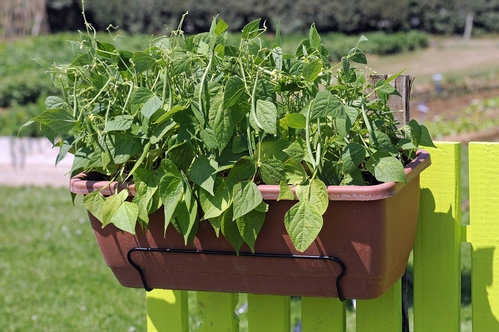
Seven plants were selected for AAS vegetable winners; ‘Mascotte’ green bean, ‘Mama Mia Giallo’ pepper, ‘Chef’s Choice Orange’ tomato, and ‘Fantastico’ tomato were selected as national winners.  ‘Mascotte’ is a great dwarf French bean that is adapted for window boxes and container gardens.  ‘Mama Mia Giallo’ has large yields of uniform shaped, long tapered, gold/yellow fruit.  “Chef’s Choice Orange’ is an heirloom-type, indeterminate, orange, hybrid tomato.  ‘Fantastico’ tomato is a very flavorful unique determinate bush tomato.  Each plant produces up to 12 pounds of fruit.  ‘Pick A Bushel’ cucumber, ‘Mountain Merit’ tomato, and ‘Rivoli’ radish were selected for regional winners. ‘Pick A Bushel’ was selected due to its early fruit set and prolific production on a bush type cucumber that only spreads 24”.  ‘Rivoli’ yields uniform, round root 1 ½” in diameter.  ‘Mountain Merit’ is a disease resistant cultivar that offers medium to large, round, red tomatoes.

All America Selections have done all of the dirty work for you.  They have tried and tested many cultivars to help the home gardener select the newest plant material for the garden.  Visit http://www.all-americaselections.org/winners/index.cfm to find out more about AAS and previous award winners.

For more information contact Elizabeth Killinger at elizabeth.killinger@unl.edu, 308-385-5088, on Facebook, Twitter, her blog at https://huskerhort.wordpress.com/, or visit the University of Nebraska-Lincoln Extension website: hall.unl.edu.


Leave a comment

Snow, Ice, and Everything Nice!

Frost Damage by Paper Boy- Photo Zac Reicher

Frost Damage by Paper Boy
Photo Zac Reicher

Winter can be a beautiful time of the year.  The gracefully falling snow or frost on the plants in the morning sun can be an attractive sight to some.  To others, it just means more work outside.  Regardless of how you feel, these winter conditions should remind everyone to think about their turf this winter.  That’s right, I said turf.  While the frost and snow are pretty, there are some steps that you can take now to ensure a beautiful looking lawn come spring.

Frost can do more than cause you to scrape your windshield.  Walking or driving across frozen turf may seem safe enough, but it can actually cause damage to the lawn which will be visible come spring.  When the grass blades freeze, they become brittle.  There are many theories as to how the frost damages the living turf tissues, but the most common belief is that the ice crystals damage the plants’ cells when they are forced into the leaf by the weight of a foot or wheel.  Early morning dog walkers, newspaper deliverers, golfers, or joggers can do significant cosmetic damage on frosted turf.  If done repeatedly, this could mean reseeding the area come spring.

It is fairly easy to spot the depressed footprints in the frosted turf, but once the frost melts the damage has a little different appearance.  The damage to the frozen turf first appears as a blackening of the leaves which gradually turns to a brown or tan color.  There is some good news though.  In the spring, turf suffering from damage due to foot traffic while frozen will normally recover after two to four mowings.

Snow may mean more work for some people, but it can be beneficial to turf.  A blanket of snow across the turf can help to protect it from the harsh winter winds and help to insulate it from the freezing temperatures.  On the other hand, snow can also cause damage to lawns.  Heavy piles of snow and deicers are often the culprits.  When scooping, avoid heaving piles of snow on the turf.  Snow that has fallen naturally isn’t as dense and compacted as shoveled snow can be.  If possible, try to disperse the snow and avoid the tall heavy piles.

Building a snowman is another fun snow-time activity that could also have an effect on your turf.  The densely packed balls of snow melt slower than the rest of the snow on the ground.  After a warm spell just Frosty remains.  These remnants of a fun afternoon could also cause damage due to the weight of the heavily compacted snow and the slower melting of the large snowballs.  To avoid Frosty’s revenge, break up the snowballs left by the snowman as the temperatures warm up and the surrounding snow begins to melts.

Take precautions now with these winter-time activities to keep you lawns looking their best this coming spring.

Upcoming Programs:

Extension Master Gardener Program- Two training sessions will be held at the UNL Extension in Hall County meeting rooms in Grand Island.  Session 1: Tuesday evenings, February 11 through March 25, 6:00 to 9:00 PM.  Session 2: March 17, 19, 21, 24, 26, and 28 from 9:00 a.m. to 4:00 p.m.  Please contact Elizabeth Killinger, 308-385-5088, with any questions about the program.  Registrations are due prior to January 17 with the session you are interested in attending.  More information, updated schedules, and an application can be found at http://hall.unl.edu

For more information contact Elizabeth Killinger at elizabeth.killinger@unl.edu, 308-385-5088, on Facebook, Twitter, her blog at https://huskerhort.wordpress.com/, or visit the University of Nebraska-Lincoln Extension website: hall.unl.edu.

Leave a comment

Live Christmas Trees are for the Birds

bluesprucecjlgLive Christmas trees add an unmistakable ambiance to the holidays.  Now that the holidays are over, the time has come to let your tree perform a different task.  Get good use out of your live Christmas tree for a while longer.  Feeding birds has become a very popular pastime that can be done year round.  There are three things to remember for bird feeding success: location, providing the correct feed and feeder for the bird you want to attract, and maintaining a constant availability.

There are a few steps you should take with your Christmas tree before you stick it outdoors for the birds.  Remove all decorations, lights, and try to remove as much of the tinsel, if not all, if possible.  The best location for the tree once outdoors is on the south or east side of the house.  This will provide shelter from the harsh north and west winter winds.  Be sure the tree is secure in its new location by setting the stump in the ground or bucket of damp sand and by attaching the top with twine to nearby buildings or trees.

Christmas trees can create a wonderful backyard habitat.  The tree can provide shelter for the birds by protecting them from the wind and predators.  It can also act as a feed station. For a fun winter project, make your own bird feeders.  Popcorn, cranberry, and raisin strings are not only festive, but they also help to feed the birds.  Popcorn will attract cardinals and finches, while cranberries and raisins attract cedar waxwings and any overwintering robins.  Apples, oranges, leftover bread, and pine cones covered with peanut butter and rolled in birdseed also make great feeders.

The saying that works with real estate also works for bird feeders– location, location, location.  Most birds prefer to feed when they are protected from the strong winds and where they can have areas with protective cover and perching sites.  Trees and shrubs nearby offer excellent perching sites while evergreens provide great cover for birds to hide.

The types of feeders and the feed you offer will determine the types of birds that you will have visiting.  Birds tend to be pretty picky with the type of feed and feeder that they prefer.  Goldfinches are easy to attract if you use niger thistle seed in a clear tube-type feeder.  Woodpeckers and nuthatches are fond of suet.  Suet is a combination of animal fat, seeds, and other ingredients that attracts insect eating birds.  It offers a quick source of energy for birds.  Suet feeders are usually a plastic-coated wire cage.  There are a wide variety of feeder types available at most home and garden centers or you can make your own.  Pick a feeder that you enjoy looking at, is easy to fill, fits the type of bird you want to attract, and fits within your price range.

In winter birds rely on you and what you have to offer.  Once you decide to start feeding the birds, it should be done consistently.  Feeding the birds in the winter makes them reliant on you for part of their diet.  Forgetting to feed the birds during a severe cold period or storm could mean that they could starve to death before they find another food source.

When your live Christmas tree has fed all the neighborhood birds be sure to take it to your local recycling areas where it can be made into habitat or useful mulch.  Grand Island had three locations; ACE Hardware at the west end of the parking lot, the north side Skagway south parking lot, and the Conestoga Mall just north of Red Lobster.  Trees can be dropped off at these locations until January 5th and will be chipped into mulch.

Upcoming Programs:

Nebraska Extension Master Gardener Program- Two training sessions will be held at the UNL Extension in Hall County meeting rooms in Grand Island NE.  Session 1: Tuesday evenings, February 11 through March 25, 6:00 to 9:00 PM.  Session 2: March 17, 19, 21, 24, 26, and 28 from 9:00 a.m. to 4:00 p.m.  Please contact Elizabeth Killinger, 308-385-5088, with any questions about the program.  Registrations are due prior to January 7 with the session you are interested in attending.  More information, updated schedules, and an application can be found at http://hall.unl.edu

For more information contact Elizabeth Killinger at elizabeth.killinger@unl.edu, 308-385-5088, on Facebook, Twitter, her blog at https://huskerhort.wordpress.com/, or visit the University of Nebraska-Lincoln Extension website: hall.unl.edu.


Leave a comment

Central Nebraska Extension Master Gardener Program

NEMasterGardener-logo-m-sqDo you enjoy plants and gardening?  Looking to learn more and hone your skills but don’t know where to go?  The Master Gardener program will educate you on many aspects of horticulture, allow you to test your knowledge and skills, all while serving your local community.

The Nebraska Extension Master Gardener program is a horticulture related volunteer training program based in many counties throughout the state.  It has been part of University of Nebraska- Lincoln (UNL) Extension since 1976.  Master Gardener volunteers are trained by UNL Extension faculty and staff. They contribute time as volunteers working with their local Extension office to provide horticulture-related information to their community. Participants are required to complete 40 hours of training and 40 hours of volunteer service during the initial year of their involvement in the program. Master Gardener volunteers retain their certification through annual training and volunteering.

Volunteer hours can be completed through various activities.  These activities could include: planting and maintaining demonstration gardens, collecting data on research projects, helping with county and state fair activities, speaking to community groups, leading garden tours, collecting plant samples, answering phone questions, teaching youth programs, or whatever sparks your interest and utilizes your talents.

Educational topics will cover a wide range of horticultural issues.  Topics that have been covered in previous training sessions include: native plants for water conservation, an in-depth look at fertilizers, turfgrass and related insects, beneficial pollinating insects and vegetable garden pests, tree and shrub pruning, pesticide safety and non-chemical pest control techniques, and small fruits and tree fruit basics.  The content of the topics is focused on the home gardener, but those employed in the green industry are also welcome.

Are you interested in becoming a Master Gardener? University of Nebraska-Lincoln Extension in Hall County will be offering two Master Gardener training sessions at the Hall County Extension Office meeting rooms in Grand Island. The first session will offer six trainings on Tuesday evenings February 11 through March 25, 6:00 to 9:00 p.m.  The second session will be held March 17, 19, 21, 24, 26, and 28 during the day from 9:00-12:00 a.m. and from 1:00-4:00 p.m.  Individuals who wish to become new Master Gardeners the fee is $160.  With that fee the Master Gardener interns receive a large resource notebook, an integrated turfgrass management book, a short-sleeved t-shirt, and a name tag.  The fee will also help fund handout materials, speaker travel expenses, room rental, and other costs associated with the training program.  For returning Master Gardeners, the fee is $15 to help fund costs associated with the training program.  The ProHort program is for green industry professionals and has a fee of $325.  ProHort participants will receive a large resource notebook, an integrated turfgrass management book, and 40 hours of education.  The general public is also welcome to attend sessions for a fee of $5 per person for each training session.  Please contact Elizabeth Killinger, 308-385-5088, prior to January 7 with the Master Gardener training session you are interested in attending.  More information, updated schedules, and a brochure can be found at http://hall.unl.edu


Leave a comment

Avoiding Winter Desiccation

bluesprucecjlgThe holiday season is upon us. We all had our fill of turkey and fixings, Black Friday is finished, and Cyber Monday is just around the corner.  You have worked hard all year to make sure your trees look their best and now is not the time to stop.

Winter is often an overlooked season when it comes to working in the landscape.  Providing supplemental irrigation during the winter months can help sensitive plants make it through the winter a little less stressed and with less winter desiccation injury.

Not all plants are susceptible to winter desiccation.  Winter desiccation happens when the plants’ roots aren’t able to soak up enough water to replace the moisture lost through the leaves.  This often results in plants having areas of yellowish/tan colored leaves come spring.  Woody plants with shallow root systems are usually the hardest hit.  Spruce, fir, pine, arborvitae, yew, Oregon grape-holly (Mahonia), holly, and boxwood are some of the more common evergreen plants that would benefit from supplemental winter irrigation during extended dry seasons.

The plant’s location within the landscape can have an effect on its potential for winter damage.  Plants that receive reflected heat from buildings or walls will be more susceptible to damage.  The reflected heat from the building can warm up the area and plants surrounding it, leading to an increase in moisture lost.  Exposure to north and west winter winds can also have an effect.  Plants that are exposed to the winter winds will often only have desiccation injury on the side that is more open to the winds.

There are a few steps that you can take to prevent winter desiccation.  For starters, make sure that the plants go into winter well watered.  It may be too late for that this year, but it isn’t too late to provide supplemental water this winter.  There are some rules to providing supplemental irrigation in the winter.  Water should only be applied when the daytime air temperatures are above 40 degrees F.  Try to apply the water in the middle of the day and allow it plenty of time to soak into the soil profile before the temperatures drop below freezing.  If it is not given ample time to soak in, there could be a resulting layer of ice on the soil’s surface that could cause some damaging effects on the trees roots and possibly surrounding turf.

Timely applications of an antidesiccant on the most susceptible plants can also help to ease winter desiccation injury.  Antidesiccant products, like wilt-pruf, reduce the amount of moisture that is lost through evergreen foliage.  They coat the needles of the plant with a light weight polymer substance that prevents water from leaving the foliage.  These products usually last about 5 or 6 weeks before they degrade in the sun and elements.  Antidesiccant products are commonly put on newly planted trees, those that are exposed to winter winds, or those that receive reflected heat.  Aim to apply these products beginning around Thanksgiving and reapply throughout the winter.  For best results, antidesiccants should be applied when air temperatures are above freezing so the liquid will dry on the leaf surface.  If you mix and spray antidesiccants yourself, be sure to clean out the sprayer thoroughly immediately after the application.  These products can form a glue-like mass inside the sprayer that will harden in the lining and can clog spray nozzles.  A hot water and soap solution flush will help to prevent damage to the spraying equipment.

As we all know, there isn’t a ‘normal’ season in Nebraska.  Each year brings its own challenges to overcome.  Last year it was the summer drought, before that it was the holiday snow storm, and who could forget the New Year Eve ice storm.  Knowing your climate, plants, and what they require can help you to decide whether or not action needs to be taken.

For more information contact Elizabeth Killinger at elizabeth.killinger@unl.edu, 308-385-5088, on Facebook, Twitter, her blog at https://huskerhort.wordpress.com/, or visit the University of Nebraska-Lincoln Extension website: hall.unl.edu.


1 Comment

Preparing Turf for Winter

Fall is good for more than just raking leaves and cooler nights.  Fall is actually one of the better times of the year to improve your turf.  Take advantage of these cooler temperatures and prepare your lawn for the coming spring.

The last fertilizer application of the year is often referred to as winterizer fertilizer.  This fertilizer application is more than just a tongue twister, it is important to prepare cool season turfgrasses for the following year.  Winterizer fertilizers are normally applied at the time of the last mowing, which is usually late October to early November.  The lawn isn’t growing ‘up’ at this time of the year, which will relocate the fertilizer to other parts of the plants, mainly the root system.  The remainder of the fertilizer will be stored in the crown and rhizomes of the turf and will be utilized next spring.

The type of nitrogen and make-up of the fertilizer can make a difference.  When you look at the fertilizer bag, there will be three numbers present.  These numbers indicate the ratio of the nitrogen, phosphorus, and potassium in the bag.  Nitrogen, the first number, is usually the nutrient that is most needed especially in the winter.  Ideally you would like to have at least half of the product to be a slow release nitrogen source, like sulfur coated urea.  Nitrogen should be applied at a rate of 1 to 1.5 pounds per 1,000 square feet.  The ratios on the bag should be similar to a 1-0-1 or 1-0-5.5, or some examples of typical numbers for winterizer fertilizers could be 21-0-20 or 19-2-13.  These ratios will provide close to an equal amount of potassium, the third number, along with the nitrogen.  Studies have shown that potassium aids the turf in tolerating stress.

Before you apply the fertilizer; can you see your turfgrass in lawn?  Heavy layers of leaves can do a few things to your lawn.  If they are thick enough, leaves can smother the lawn and also create conditions that can be favorable to snow mold.  Raking or mowing the leaves on a regular basis can help to prevent this heavy layer of leaves from forming and matting down on the turf before winter.  If the leaves aren’t utilized in the compost pile or worked into the garden soil, they can simply be mowed over.  Using the mulching blade on the lawn mower will chop up the leaves into smaller pieces that are able to filter down between the grass blades.  This helps keep you from having to haul the leaves away and it also helps to add organic matter back into the soil.  By removing or mulching the leaves on the lawn, you can ensure that your high quality winterizer fertilizer will be able to filter down to the soil where it can be used by the turfgrass, rather than sitting up on top of the leaf litter.

Good news. There is still time to control pesky perennial weeds.  The ideal season to control perennial weeds like ground ivy, also known as Creeping Charlie, was between September 15th and the first frost, but there is still time.  Research out of Purdue shows that herbicides that contain triclopyr, like Turflon, were effective on ground ivy and retained their effectiveness when applied later in the season regardless of the first frost.  The study showed that broadleaf applications should be effective when made into the first week or two of November, but control might be not be seen until spring.

With a little time and effort now, your lawn can still look green and lush next spring and hopefully with a few less weeds too.

For more information contact Elizabeth Killinger at elizabeth.killinger@unl.edu, 308-385-5088, on Facebook, Twitter, her blog at https://huskerhort.wordpress.com/, or visit the University of Nebraska-Lincoln Extension website: hall.unl.edu.


Leave a comment

Preparing Gardens for Fall

Don't forget about the pumpkins. Photo courtesy of Lancaster County Extension

Don’t forget about the pumpkins. Photo courtesy of Lancaster County Extension

The presence of frost usually means that your vegetable garden is either limping toward the finish line or has completed production for the year.  Fall is the perfect time to clean up the vegetable garden and its tools to prepare them for next year.

There are a few more tasks to complete before you put your gardening tools away for the winter.  Before you perform the actual clean-up of the garden, make notes about the year. Record the garden layout, cultivars that worked (or didn’t), and pests or diseases you encountered this past year.  This will help you next spring when it is time to plan the garden and help you to remember what vegetables were in which location for your crop rotation schedule.  The goal is to have a 3 year crop rotation plan.  This is where vegetables from the same plant family are rotated around different locations within the garden.  The objective is to avoid placing those plant families in one particular location for 3 years.

The actual clean-up of the garden is the next step.  Elimination of garden debris, like dead plant material, fruit ‘mummies,’ weeds, and rotting vegetables, can help to reduce disease, weed, and insect problems next year.  Remove and discard disease or insect infested plant material, but do not compost.  Compost piles do not reach high enough temperatures to kill all pathogens, like fungal spores and bacteria.  Discarding or burning the infected plant material will remove the pathogens that could potentially infect next years’ crops.  Removal of weeds with mature seed heads will not only improve the appearance of the garden, but also help remove the seed source for potential weeds in next years’ garden.

Adding organic matter can help improve soil composition.  Incorporating residues from healthy plants can act as a great source of organic matter, which can improve the texture of the soil.  These healthy plants can either be turned or tilled into the soil or tossed into the compost pile.  Organic mulches that were used in the garden, like straw, grass clippings, or even newspaper, can also be tilled into the soil.  Tree leaves are another great source for organic matter for the garden.  Leaves that are picked up with the lawn mower will break down faster once they are worked into the soil because they are chopped into smaller pieces.

Cages and trellises also need some clean up in the fall.  Support structures, like tomato cages or trellises, should be pulled out of the ground, cleaned up, and placed in storage for winter.  If you have had disease issues in the past, like blight in tomatoes, now is also an excellent time to disinfect the cages or trellises to keep them from infecting new plants next year.  A 10% bleach solution, alcohol wipes, rubbing alcohol, or even ready-to-use bleach wipes can be used to disinfect the cages prior to winter storage.

Speaking about putting your garden tools away for winter…it’s time for some end-of-the-year tool maintenance.  Digging tools, like shovels, hoes, pitchforks, and garden rakes, should have excess soil removed from them.  Any rust that is present can be removed using a wire brush and a little bit of elbow grease or an electric drill with a wire brush or sanding attachment. After rust is removed, renew or sharpen the edges and points with a mill file or grinding wheel.  For winter storage, apply a light coating of oil.  Tools can even be stored in a 5 gallon bucket filled with sand and oil.  Inspect the handles of your tools at the end of the season for cracks or splinters.  Replace the handles if necessary.  If the wooden handles are in good condition, they can be sanded and oiled at least once a year.  Use a fine grade sand paper to smooth the surface.  Remove any dust and rub linseed oil into the handle and allow it to soak in.  Keep applying until the oil doesn’t absorb any more.  Wait a half hour, and dry off any oil remaining on the surface.

For more information contact Elizabeth Killinger at elizabeth.killinger@unl.edu, 308-385-5088, on Facebook, Twitter, her blog at https://huskerhort.wordpress.com/, or visit the University of Nebraska-Lincoln Extension website: hall.unl.edu.