Husker Hort

A Nebraska View of Horticulture


1 Comment

Fall Invaders

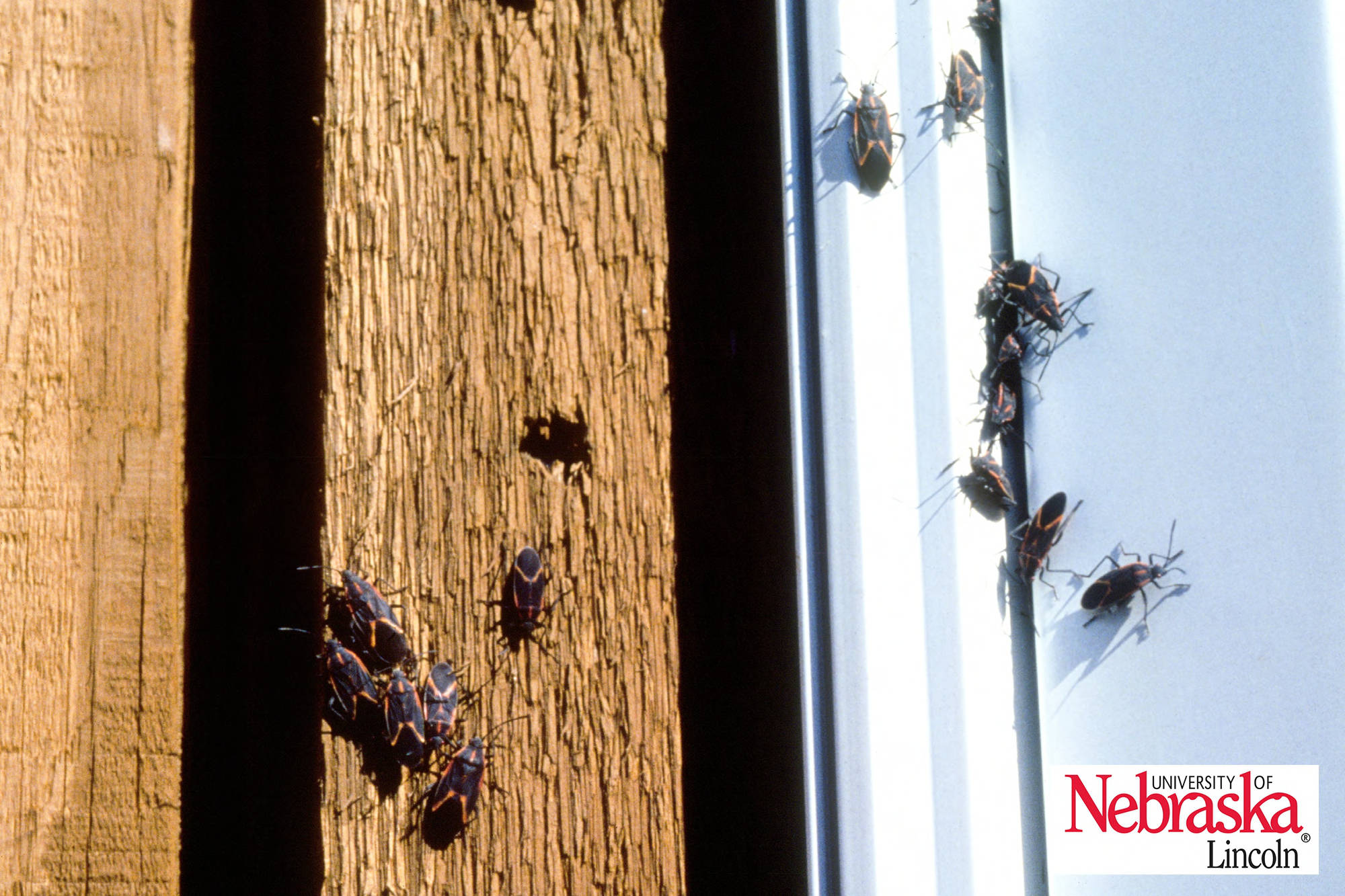
Boxelder Bugs around a window.

Boxelder Bugs around a window.

Warm days and cool nights signal that fall is here.  The pumpkins are ready to be picked, the leaves will soon be in full color display and the wolf spiders and crickets will start migrating into the home.  Not exactly what you had in mind for a peaceful fall?  Find out how to start preparing now to keep these invaders from making themselves at home in your home.

When the temperatures start dipping, the pests start coming in.  Nobody really wants to spend the winter outdoors and insects are no different.  Some of the more common nuisance pests, or occasional invaders, include boxelder bugs, multicolored Asian Lady Beetles, millipedes, and crickets.  These pests don’t do any harm inside the home; they are just looking for a cozy place to spend the winter.

Proper identification of the insect will assure the proper control method.  Boxelder bugs are black and orange true ‘bugs’ that can be found in large numbers around foundations sunning themselves or trying to find their way inside. Multicolored Asian Lady Beetles are the orange ‘lady bugs’ with black spots.  Their distinct smell and ability to bite makes them even more of a nuisance once inside the home.  Millipedes are often misidentified as ‘wire worms.’  These skinny, brown critters have two legs per body segment and will curl up when disturbed.  Crickets hop their way into homes and provide ‘music’ in the night with their chirping.  Commonly it’s the black field cricket that migrates inside, but there are others that follow right behind.
Wolf Spider

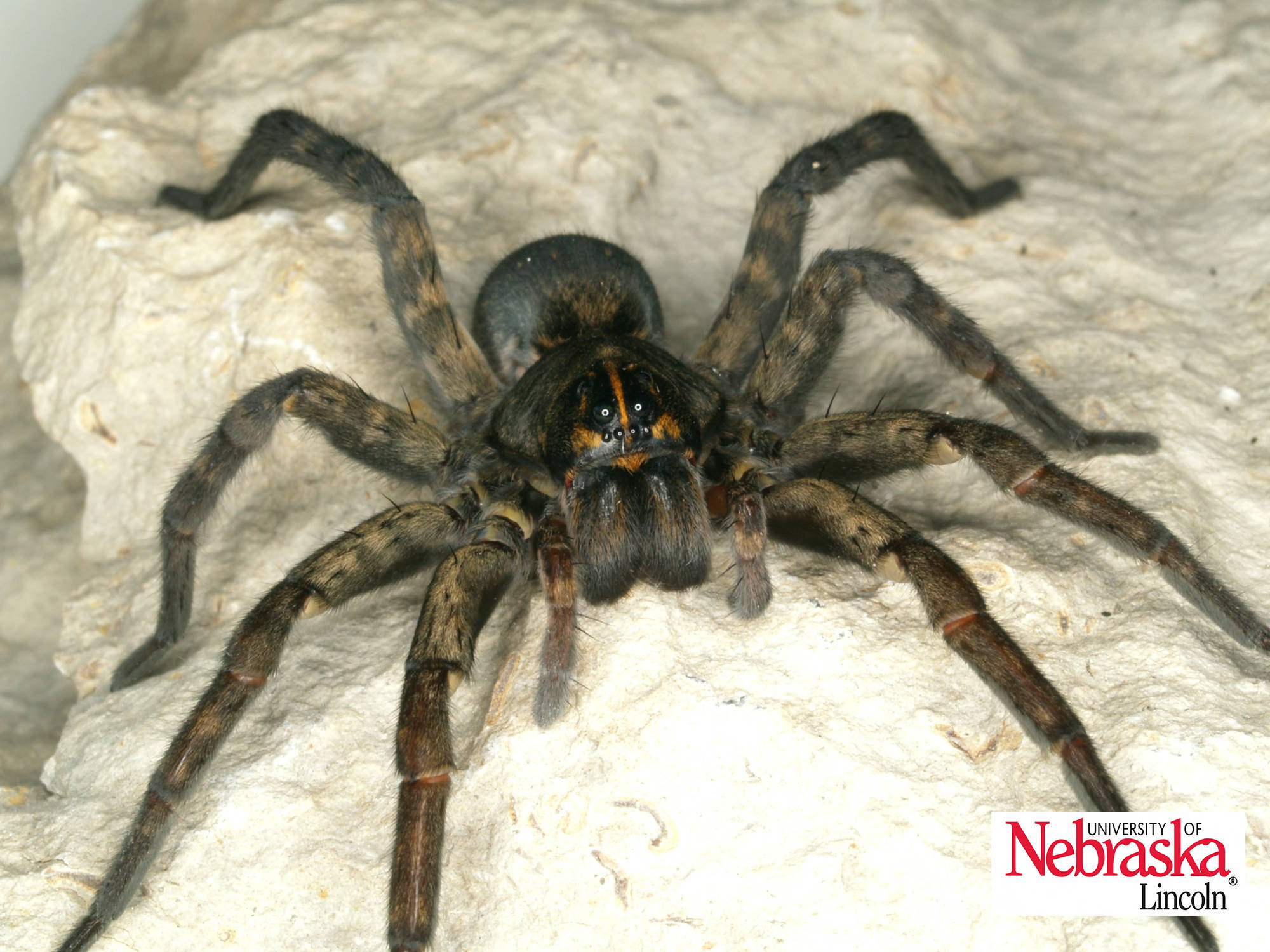
Wolf Spider

Wolf spiders may look scary, but they are more bark than bite.  These large, hairy spiders can be found both outdoors and occasionally inside the home.  They are not poisonous nor do they want to disturb people.  They are hunting spiders, so they don’t spin a web or a trap, but prefer to chase down their prey.  They often find their way into homes in the fall following their favorite food source the cricket.

The saying “an ounce of prevention is worth a pound of cure” has never been more true.  Discouraging occasional invaders from entering the house is going to take a little work, but it will be worth it in the long run.  Start by finding and sealing up any cracks or spaces they could enter through with silicone caulk or expanding foam.  Make sure that window screens are in good repair and that doors are tight fitting.  Also remove any dead plant debris from window wells.

Pests can be discouraged from entering the house in a number of ways.  The most common way is by applying an outdoor perimeter insecticide treatment.  These insecticides are labeled for various pests and often times have residual effects to help protect the house for longer.  Read and follow the label instructions on how and where these products should be applied.  Ideally, try to apply these insecticides out from the foundation about five to ten feet around the perimeter of the home. The insecticides will help to decrease the numbers of pests that make it inside the house, but don’t expect it to stop all of them.

Monitor the home regularly to see what pests have made their way inside.  Glue boards are sticky boards used to catch and hold pests as they try to move throughout the home.  Be sure to use sticky boards in locations where non-target animals, like pets, won’t get stuck in them.  If something other than the target pest does happen to get ‘caught’ in the trap, use an oily material, like vegetable or mineral oil, to dissolve the sticky substance on the trap.  When properly placed, these traps will allow you to see which pests are inside the home and their approximate numbers.

Once pests are found inside the home, there are a few techniques that you can use. The handy broom and dust pan or the vacuum are two techniques; they are also very environmentally friendly and very cost effective.  Be careful when selecting insecticides for use inside the home.  Read and follow instructions carefully as many of these products have to come into contact with the insect themselves and don’t offer much residual protection.

With a little prevention and monitoring you can ensure that you are sharing your home with wanted house guests this fall and winter.

For more information contact Elizabeth Killinger at elizabeth.killinger@unl.edu, 308-385-5088, on Facebook, Twitter, her blog at https://huskerhort.wordpress.com/, or visit the University of Nebraska-Lincoln Extension website: hall.unl.edu.


1 Comment

Celebrate ReTree Nebraska Week

Photo of Youth Planting a Tree in Lincoln, NE. (courtesy ReTree NE)

Photo of Youth Planting a Tree in Lincoln, NE. (courtesy ReTree NE)

Every good Nebraskan knows we are the home of Arbor Day.  Did you know we also have another opportunity to celebrate trees?  ReTree Nebraska week is dedicated to trees.  Find out why we should re-tree Nebraska and how you can take part in this week long celebration from September 22nd – 28th.

ReTree Nebraska is a cooperative initiative of the Nebraska Forest Service, Nebraska Statewide Arboretum, University of Nebraska Rural Initiative, University of Nebraska–Lincoln Department of Agronomy and Horticulture, and Nebraska Community Forestry Council.  It is a 10-year cooperative initiative which will raise public awareness of the value of trees, reverse the decline of Nebraska’s community tree resources, and improve the diversity and sustainability of trees in communities across the state that will last for generations to come.

Severe weather, drought, poor planting practices or species selection, insects, disease and an aging tree population all have contributed to the decline in the number of community trees across the state. Planting new trees is an essential part of maintaining Nebraska’s community forest, and fall planting offers important benefits.

Just because we are a ‘Prairie State’ doesn’t mean that we don’t have or need trees.  Across Nebraska, there are about 470,000 acres of community forests. These trees were planted by previous generations who understood the long-term benefits they would provide, such as cleaner air, healthier soil and wildlife habitats. Planting a tree provides much-needed shade during hot Nebraska summers, which helps reduce energy costs for homeowners, schools and businesses.  Every dollar invested in the community forest returns an average of $2.70 in net annual benefits. Nearly $9.7 billion in environmental, social and economic benefits are provided by 13.3 million trees in Nebraska communities, but that’s half the number of trees that were present 30 years ago.

Fall is an optimal time for tree planting.  “Fall is a great time to plant trees in Nebraska because there are fewer demands on the roots, allowing trees to establish their root systems and get a jump start on spring growth,” according to Jessica Kelling, ReTree Nebraska coordinator.

When selecting a tree species, Kelling recommends considering a couple of key factors. Plant a different species than what is already growing in adjacent areas. “Enjoy the two weeks of fall color your neighbor’s red maple provides, but select a tree for your yard that provides some variety in leaf texture, form and fall color to create a diverse landscape year round.”  Kelling also urges homeowners to take a tree’s mature height and width into consideration when selecting a species for planting. “Go to the planting site and look up, down and around for conflicts with buildings, utility lines and even other trees.”

If you are looking for a good tree to plant this ReTree Week, ReTree Nebraska has “Thirteen for 2013,” a list of underutilized tree species.  The trees are broken down by size and type and include:

Evergreen- Concolor fir—Abies concolor, Black Hills spruce– Picea glauca var densata,

Small to Medium Deciduous Trees- Shantung maple—Acer truncatum, Miyabe maple—Acer miyabei,  Gamble Oak- Quercus gambelii, Japanese or Pekin Tree lilac-Syringa reticulate (‘Ivory Silk’) or Syringa reticulate ssp. pekinensis (Copper Curls®)

Large Deciduous Trees- Kentucky coffeetree—Gymnocladus dioicus, Northern catalpa—Catalpa speciosa, Baldcypress—Taxodium distichum, Bur oak—Quercus macrocarpa, Chinkapin oak—Quercus muehlenbergii, English Oak—Quercus robur, Elm hybrids—Ulmus x (‘Accolade’, ‘Cathedral’, ‘Frontier’, ‘New Horizon’, ‘Pioneer’, ‘Triumph’, ‘Vanguard’), Black or Bigtooth Maple- Acer nigrum or Acer grandidentatum

We can work together to celebrate this week as well as support a grassroots, or rather tree roots, Nebraska initiative. To learn more about ReTree Nebraska, report a tree planting, or find out more about tree selection, planting and care, visit www.retreenebraska.unl.edu or email retreenebraska@unl.edu.

For more information contact Elizabeth Killinger at elizabeth.killinger@unl.edu, 308-385-5088, on Facebook, Twitter, her blog at https://huskerhort.wordpress.com/, or visit the University of Nebraska-Lincoln Extension website: hall.unl.edu.

Leave a comment

Black Gold… aka Compost

Turning Compost.  Photo from byf.unl.edu

Turning Compost. Photo from byf.unl.edu

Fall will be here before we know it.  Many things change as we get closer to autumn.  The leaves begin to change, the gardens are finishing production, the landscape is getting ready to be put to bed for the season, and the compost pile continues to grow.  Compost pile?

Compost is created from the leftovers in your landscape.  Leaves, small twigs, and grass clippings can all be gathered together in the fall and turned into a high quality material than can be used in several different ways.

Composting garden waste not only helps the environment, but also your wallet.  Composting garden waste and leaves allows nature to do the hard work in a simple, inexpensive way, and keeps you from hauling away the materials to the landfill.  A well-made compost heap creates an environment where decay causing bacteria live and reproduce to convert manure, leaves, and grass into dark, rich humus.  During the composting process, the carbon in the plant material is broken down, which produces heat.  Temperatures in a pile can reach 160 degrees Fahrenheit.  If properly maintained, the high temperatures can kill weed seeds and other undesirables found within the pile without much smell.

There are rules for the materials that go into a compost pile.  Leaves, grass clippings, straw and non-woody plant material are all great additions to the pile.  Branches, logs, and twigs that are larger than ¼” can be included, but the must be shredded or cut into smaller pieces first to help in the decomposition process.  Kitchen waste like vegetable scrapes, coffee grounds, and eggshells are other ingredients that can be included in the compost pile.  Materials like pet feces, meat, bones, grease, whole eggs, and dairy products are some items that should be kept out of the pile.  These materials can cause a health threat or attract unwanted visiting wildlife.

To have a properly working compost pile, it needs to be the right size.  The pile should be large enough to hold heat, but yet small enough to allow good air circulation to its center.  Generally a compost pile should be at least 3’ tall, 3’wide, and 3’long in order to hold enough heat.  The height and width should be no more than 5’ to allow air to circulate to the center of the pile.

Layering is a key component in building a compost pile. Before building, put base layer of 4-6” of chopped brush or other course material over the soil in the area you be placing the pile.  This will help with the air circulation under the pile.  On top of that, put a 3-4” layer of low carbon organic matter, green material like grass clippings.  Follow that with at 4-6” layer of a high carbon organic matter, brown material like leaves or garden waste.  Both layers should be damp to the touch, so add water accordingly.  The material should be damp enough that a drop or tow of liquid is released from a handful when squeezed.  Finish with a 1” layer of garden soil or finished compost.  This will introduce the microorganisms that are needed to break down the organic matter.  Before adding more material to the pile, mix all but the base layer together.  This will help even the decomposing within the pile.  Keep repeating the layering process until you create the desired size of the compost pile.

Compost piles can have as little or as much maintenance as you want to put into it.  The lowest maintenance is a ‘passive pile,’ or a pile that is just left alone.  Actively turned piles will keep the conditions right for a quicker breakdown of plant debris.  With active piles, the compost is turned about once a week using a pitchfork, mixing the new debris with the old.  Piles that are excessively turned will not keep consistent temperatures and the compost will take longer to develop.  Also maintain the proper moisture level of about 50%, 1-2 drops squeezed out of the matter.

‘Black Gold’ or finished compost has many uses.  It is dark brown, crumbly, and earth smelling.  There still may be some small pieces of leaves or other ingredients that may be visible.  The possibilities are endless to what you can do with compost.  It can be used to amend soils, as a component in soil mixtures for container, as a topdress fertilizer for the garden, mulch, or even for a compost ‘tea’.

There are just as many techniques for making compost as there are uses for it.  The key is finding the right way that works for you.

For more information contact Elizabeth Killinger at elizabeth.killinger@unl.edu, 308-385-5088, on Facebook, Twitter, her blog at https://huskerhort.wordpress.com/, or visit the University of Nebraska-Lincoln Extension website: hall.unl.edu.

1 Comment

Turf’s Yellow Streak

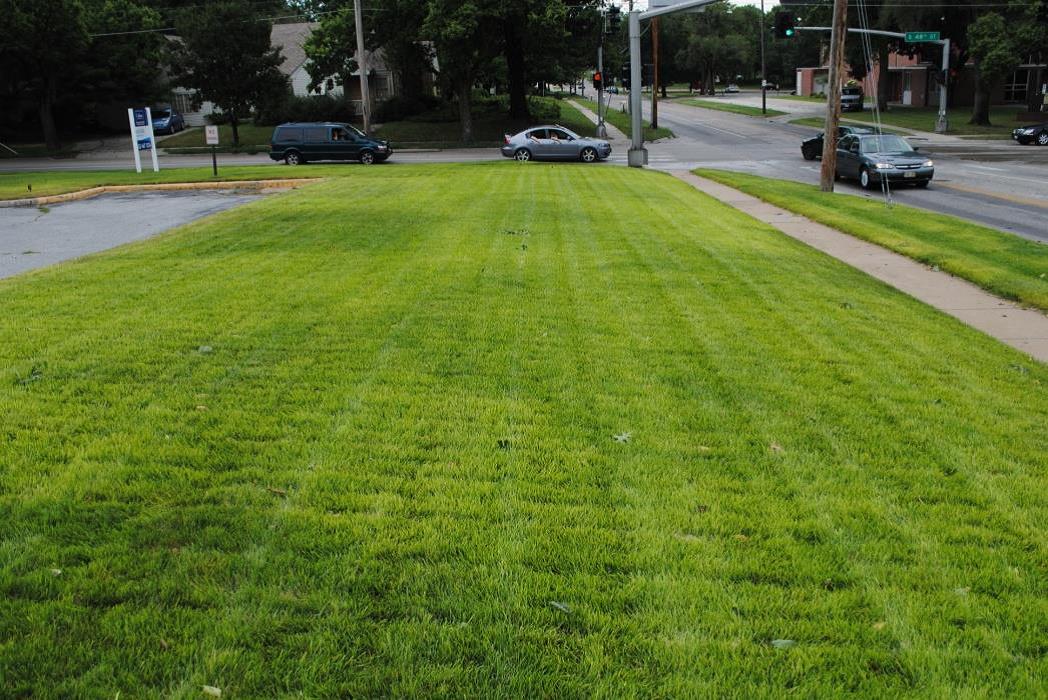
Yellow turf Photo from turf.unl.edu

Yellow turf
Photo from turf.unl.edu

This year has been a bit more ‘normal’ compared to last year.  The timely rains have kept many from having to run their irrigation systems and saved many lawns from going dormant.  The question that is stumping many people this season is “What’s with all the yellow turf?”

Yellow colored Kentucky bluegrass has been spotted all around the region.   While we don’t know the exact cause of the yellow lawns, there are several factors that are known.  The symptoms appear to only be affecting some cultivars of Kentucky bluegrass.  It has not been seen in tall fescue or perennial ryegrass.  The symptoms mainly appear only on the upper, young leaves.  This discriminating coloration means that it probably isn’t a deficiency of nitrogen.  Nutrients like nitrogen are mobile in the plant; if one leaf is affected, they will all be affected.  Other nutrients like iron might be to blame as it isn’t as mobile in the plant, which can lead to spotty symptoms.  On the turf that has been examined, there isn’t a notable lesion or spot on the leaf, which rules out many diseases and fungal infections.

The weather we have had this season might be playing a role in the yellow streak.  The symptoms are most often seen in lawns that are mostly irrigated.  They also happen when the soil temperatures are at their seasonal highs during wet summers.  There can be some similar yellowing symptoms in the spring, but they are attributed to denitrification, or loss of nitrogen, in the soil.

What can a person do?  You will be happy to know that this sickly color only affects the visual appeal of the Kentucky bluegrass.  It doesn’t seem to have any long term impacts on the overall health of the plant.  No need to apply a fungicide, insecticide, or fertilizers with less than 0.5 pounds of nitrogen per 1,000 sq ft.  Reducing irrigation for the short term should help with this coloration issue.  If you wanted to try to green up your turf, you could try a low rate application of iron.  This could give you back your green color, without the use of nitrogen fertilizer, which isn’t recommended in August.  Mowing could also remove a majority of the discolored younger foliage which is higher up in the canopy.

Some longer term solutions might need to be considered if this turns out to be an annual occurrence.  The main goal is going to include increasing drainage and reducing compaction.  Core aeration is one way to increase drainage to lawns that are compacted, on heavy clay, or have heavy traffic.  Another longer term option could include overseeding with a different cultivar of Kentucky bluegrass or possibly changing turfgrasses altogether.  To get the best of both worlds, you can try both aeration and overseeding.  Take advantage of the holes caused by core aeration and overseed at the same time.  The rule of thumb is that for each week grasses are seeded before Labor Day, development is speeded by two weeks.  The optimal window to seed cool-season turfgrasses is August 15 to September 15.  Thin stands of Kentucky bluegrass should be overseeded with improved cultivars at .75 to 1 pound of seed per 1,000 square foot.  If you are overseeding a tall fescue lawn, use a blend of improved turf-type tall fescue cultivars at a rate of 4 to 6 pounds of seed per 1,000 square feet.  Ensure the seed has good seed to soil contact and irrigate frequently to for the best germination.

If your lawn has a yellow streak, don’t worry.  A little time and a lot of patience will yield a greener appearing lawn.

For more information contact Elizabeth Killinger at elizabeth.killinger@unl.edu, 308-385-5088, on Facebook, Twitter, her blog at https://huskerhort.wordpress.com/, or visit the University of Nebraska-Lincoln Extension website: hall.unl.edu.


Leave a comment

Attack of the Killer Wasps


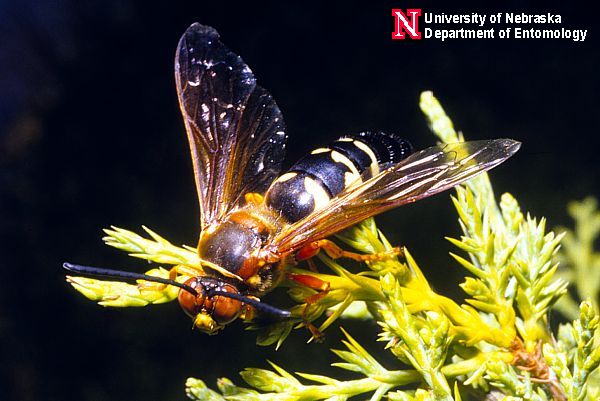
Cicada Killer Wasp

Cicada Killer Wasp

It sounds like a scene right out of an old horror movie.  Insects are taking over the world.  Hornets are so large they are big enough to carry people away and insects are taking over homes and businesses.  I have to admit I might be exaggerating a bit, but there are some insects that can be frightening to look at or in such large numbers it might feel as if they are trying to take over.  In reality they are just more buzz than sting.

Cicada killer wasps have a frightening name, but that is about all.  These wasps are by far the largest wasp species in Nebraska, up to two inches long.  Their black bodies have a yellow stripe color pattern that is similar to other wasps.  Cicada killers, like their name implies, hunt cicadas, sometimes known as locusts.  They listen for the cicadas to sing then attack and sting to paralyze them.  They carry the paralyzed cicadas to their underground burrows where the female cicada killer will lay her eggs on it.  When the eggs hatch, the wasp larvae feed on the cicada.

The nests of these insects are not always placed in the best location.  The cicada killers’ nests are in the ground, usually near sidewalks, driveways, retaining walls or other areas of exposed soil.  They can be identified by the half-inch wide entrance hole with fresh soil surrounding it.  If you get close to their nest, they will alert you.  These wasps are very docile and often will just fly around your or act like they are coming after you.  When a person walks by a cicada killer, the wasp may become disoriented.  It will circle around the person as a way to reestablish its position, they not attacking.  While they are a wasp, they rarely sting unless severely provoked.

While control is rarely needed, there are some things you can do to ease your mind.  Cultural methods can be used to detour these wasps from making their nests in particular locations.  Since they make their burrows in out of the way places, take steps to encourage dense lawns or place extra mulch around the flowerbeds and around shrubs to cover bare soils.  Insecticidal control can be used if the nests do become a problem.  Use an insecticide labeled for use on wasps and be sure to read and follow the label instruction.  Take caution when applying insecticides to wasp burrows.  Apply products in the cooler parts of the day, either early morning or later in the evening, when the insects will be in their burrow and not as aggressive.

They might not be taking over the world, but there is an insect that is invading homes right now.  The strawberry root weevil is a common home-invading insect that is black or dark brown and about 1/4 inch long.  They are often confused with a tick, but they have 6 legs instead of the 8 that ticks have.  The larvae feed on the roots of strawberries, evergreens, brambles, and grapes.  The adults, which are all female, emerge in summer and feed on the edges of foliage, giving a notched appearance.

The beginning in late July to early August the adult strawberry root weevils begin to migrate into homes.  Once inside the home, they don’t cause any damage and are just more of an annoyance than anything else.  They are attracted to moisture and will often be found in sinks, bathtubs, or other similar places.  Control inside the home is rarely required, in a few weeks the migration will be completed.  Once found inside they can be vacuumed or swept up.  While there are pesticides labeled for inside home use, they are rarely recommended.  To prevent entry into homes, now would be the time to apply a perimeter spray that contains bifenthrin, cypermethrin or cyfluthrin.

Insects might not be taking over the world, but there are times when larger than average wasps and armies of strawberry root weevils invading homes might make it feel as if they are.

For more information contact Elizabeth Killinger at elizabeth.killinger@unl.edu, 308-385-5088, on Facebook, Twitter, her blog at https://huskerhort.wordpress.com/, or visit the University of Nebraska-Lincoln Extension website: hall.unl.edu.

Leave a comment

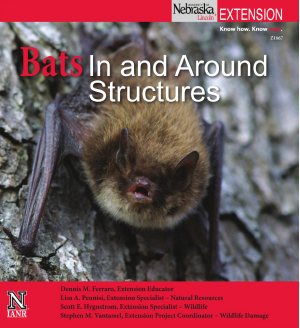
Gone Batty

New UNL Extension Publication about bats

New UNL Extension Publication about bats

What is small, flies at night, eats 25-125 percent of its body weight in insects each night and gives most people the heebie-jeebies?  Bats are more than just scary little critters that want to suck your blood; they are helpful creatures that are worth their weight in insect control

These winged mammals are more misunderstood than scary.  There are about 13 species of bats living in our great state, most are rarely found in or around structures.  Bats are insectivores and only need small needle like teeth to crush the insects they catch in flight.  These nocturnal creatures have good vision, but rely on echolocation, or sonar, to hunt in the dark for their prey.  Man, can they eat!  One little brown bat can eat 600 to 1200 mosquito-sized insects every hour.

Only a few species of bats are common in or around structures.  The big brown bat is the most common across the state.  It has dark brown fur on its back, pale brown fur on its underbelly, and it has exposed black skin on its nose, ears, and wings.  It is about 4-5 inches long from nose to tail and weighs a whopping 1/2 to 1/3 of an ounce.  When its wings are fully extended, they can reach lengths of 12 to 16 inches, making it look much larger in flight.

Bats will leave their own ‘calling cards’ to let you know they are around.  The most common sign that a bat is in the area are their droppings, guano.  Bat droppings will look like it contains specks, which are the exoskeletons and wings of insects.  Droppings are often found on attic or porch floors and under eves and shutters.  A 3/8” hole is all the space a bat needs to get into a structure.  The bat will use these openings every evening to go in and out.  Rub marks or smudges, caused by the oil and dirt in the bats fur, are often found near these opening and can alert you of a bat entrance.

July is the month many homeowners encounter bats.  At this time of the year, young bats move around the structure, but they are not strong enough to forage for insects.  They often find their way into the living quarters of the home or just outside their entrance points into a structure.  Young bats are also more likely to fly inside an open window or door.

There are some steps you can take if a single bat has entered the home.  First, open all exterior door and windows and shut the doors to adjacent rooms.  Leave the lights on and stand motionless next to a wall or in a hallway leading to the room.  Wait patiently for the bat to swoop around the room, find an escape route and fly out on its own.  Try to observe the bat leaving the home so you can be sure it made it out safely.

If the bat is at rest on the wall there are some other steps you can take to remove it.  While wearing a thick pair of leather gloves place a large mouthed container over the bat and slide a stiff piece of cardboard between the container and the wall.  The cardboard will help to secure the bat inside the container, allowing you to either get it tested for rabies or to set it free.  If you set it free, place it up at least 4 feet off the ground so it can gain enough lift to fly away.

Bats are associated with rabies, a disease that can be transmitted to humans. While significant, infection can be easily avoided and should not be used as an excuse to kill bats. Only a very small percentage of bats are associated with rabies. Due to their small teeth, you might not realize you have been bitten.  Nebraska has the recommended protocol for handling potential bat-human exposures. Assume a person was bitten if:

  • He/she awakens to find a bat in the room.
  • A bat is found in the room with someone unable to communicate well (i.e. children, intoxicated or otherwise mentally impaired).
  • The bat made contact with a person.

In these situations, do not release the bat.  Take care not to damage the bat’s head.  Contact local health officials to determine where the bat needs to be sent for rabies testing.  If the bat is not found within a couple of hours, talk to your health professional about needed treatment.

The next time you see a bat, think of all these mosquito-munching, nocturnal creatures do to help keep pesky mosquito populations in check.

For more information contact Elizabeth Killinger at elizabeth.killinger@unl.edu, 308-385-5088, on Facebook, Twitter, her blog at https://huskerhort.wordpress.com/, or visit the University of Nebraska-Lincoln Extension website: hall.unl.edu.


2 Comments

Grubs


White Grubs

White Grubs

June 21st marked the start of the summer season.  Summer means a good time for cookouts, picnics, swimming, and grub control.  Not exactly what you had in mind for summer fun?  Knowing the pest and its habits can help keep you from spending all of your summer fun time dealing with grubs.

White grubs are the larvae of a group of beetles called scarab beetles.  There are many scarab beetles in Nebraska, but only a few can cause significant damage to turf.  The more common ones include the masked chafer, or annual grubs, and the May/June beetles, or three-year grubs.  White grubs look very similar.  They have C-shaped bodies that are cream or white colored, have reddish-brown heads, and three pairs of short legs right behind the head.

There are minor differences between the species, but they all have the same type of feeding patterns.  The grubs feed below the soil surface on the roots of all common turfgrass species.  They are capable of destroying the entire root system of the plant if infestations are heavy enough.  The first signs of grub damage include areas of pale, discolored, dying grass displaying signs of moisture stress.  The adult beetles of these grubs rarely cause much damage and are more of a nuisance than anything.

Damaged areas are small at first, but will grow rapidly as the grubs grow and enlarge their feeding area.  The affected areas may feel spongy and can be easily lifted from the soil surface or rolled like a carpet.  Another indicator that your lawn may have grubs is small areas that are dug up by animals like raccoons, skunks, or moles foraging for the insects.

A few grubs in your lawn doesn’t necessarily mean that an insecticidal control is needed.  There are threshold levels that warrant insecticidal control.  For masked chafers 8-10 grubs per square foot and 3-5 per square foot May/June beetles are the threshold levels.  If you have more insects than that, a curative treatment will be needed, usually around the first week of August.  If you have had a history of grubs in your lawn, a preventative insecticide application the third week of June through early-July will have the insecticide in place when the eggs begin to hatch.

Products for grub control have changed over time.  Before 1999 grub insecticides were used as curative treatments.  They were fast acting, had a short residual activity and needed to be applied within a narrow treatment window.  New types of insecticides are now available that offer the opportunity for preventative treatments.  These products are slower acting, but they have a much longer period of residual activity and are available for a much wider treatment window.

There are a wide range of products that can be used to treat grubs.  Chlorpyrifos (Dusban), carbaryl (Sevin), isazophos (Triumph), Chlorantraniliprole (Acelyprin), Imidacloprid (Merit), and Halofenozide (Mach 2) are just some examples of the products that will work well to control grubs.  Trichlorfon (Dylox) can be applied for curative control if white grubs exceed threshold levels later in the season.  Be sure to read and follow the label instructions.

Keep in mind that no registered insecticide is 100% effective.  On average they usually kill 75 to 90% of the grubs present in any given area. Re-applications may be necessary when grub populations get very high.  Scouting early and catching the problem before the numbers get too high will help allow you to have a worry free summer.

Can’t get enough horticulture information?  Listen on Fridays at 8:15 a.m. on KRGI 1430 am to hear ‘Everything Outdoors.’  It is a live call-in radio show in which Hall County Extension Educator Elizabeth Killinger gets you the answers to your horticulture questions.


For more information contact Elizabeth Killinger at elizabeth.killinger@unl.edu, 308-385-5088, on Facebook, Twitter, her blog at https://huskerhort.wordpress.com/, or visit the University of Nebraska-Lincoln Extension website: hall.unl.edu.


Leave a comment

What’s Wrong with My Tree?

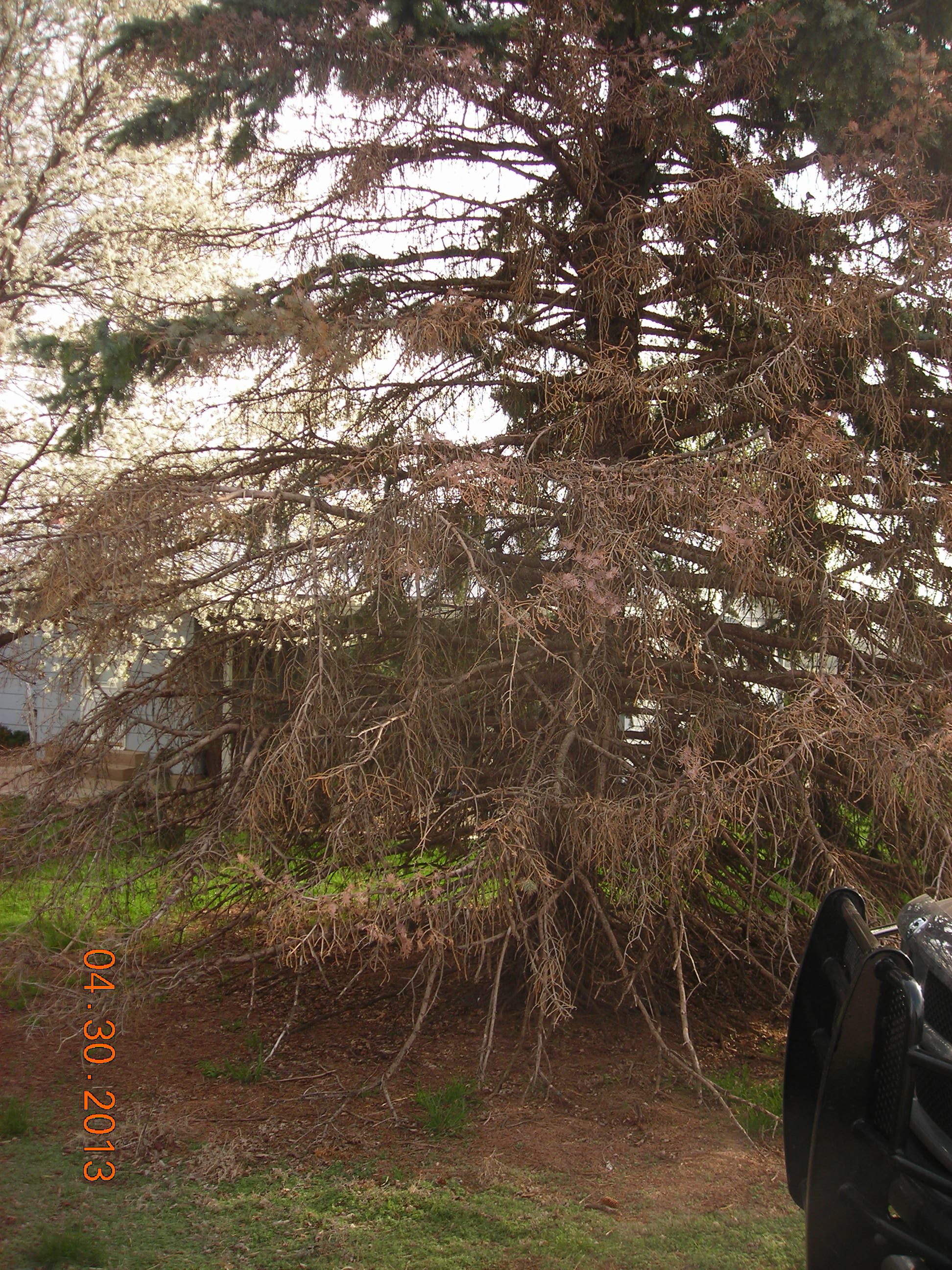
A client's spruce tree

A client’s spruce tree

The most common horticulture question this season has been “What’s wrong with my evergreen tree?”  While this may sound like an easy question to answer, the solution really depends on the symptoms, the trees affected, and the plants’ history.

Many trees have been showing symptoms this year that are actually the result of last year.  A few of the most common trees that have been showing symptoms are arborvitae, cedar, and spruce.  While we think of these trees as being tough-as-nails, every plant has its threshold.  These trees are tough until the going gets rough and the moisture gets short.  Browning foliage or completely missing needles have plagued these species.  The most common cause of these symptoms we have been seeing in these trees is due to the drought and lack of moisture.  Trees that didn’t receive supplemental water during the drought last summer or throughout the winter are just now showing symptoms.  Deciduous trees were also affected by last years’ drought.  Symptoms can include slow bud break, stunted growth, or even plant death.

How severely the plant was affected can make a difference in how you tackle the recovery.  If you have trees that are completely brown or have no needles or leaves, the sad news is that they probably won’t recover and replacement might be your best option.  If you have trees that have brown spots or branches in the canopy or are just slow to leaf out, there could still be hope.  Make sure that trees have at least an inch of supplemental water a week in the absence of precipitation or irrigation.  Do not fertilize stressed trees.  It could cause more harm than good.

Pine problems are also plaguing many homeowners.  Where the brown is occurring in the tree can make a difference in what is affecting them and how to treat it.  Trees with brown tips on this years’ new growth, could be caused by a fungus.  Last years’ new growth that is half brown and half green could have also been caused by a fungus.  Sphaeropsis tip blight and dothistroma needle blight are common in older, well-established trees.  The fungi that cause these diseases overwinter in dropped needles or pinecones.  The best time to spray for either of these fungal infections is earlier in the season around April or May, depending on the fungus.  Right now if you are noticing brown tips, they can be pruned out, but it is too late for fungicide applications for this year.  The trees with needle blight often are still able to photosynthesize with the remaining needles, so curative treatments are rarely recommended.

Another pine problem in our area is pine wilt.  The symptoms start as the entire tree or a major branch turns an off grayish green color.  As the nematodes progress and multiply the tree turns tan and then eventually brown.  The dead brown needles will remain on the tree for a year or more.  The wood from the tree will also be very light in weight and have almost no sap or sticky resin in the wood.

Prevention is the best method when it comes to pine wilt.  Insecticidal treatments could help to protect high value, susceptible trees.  Trees need to get the treatment before they show symptoms of being infested with the nematodes.  The cost of the treatment depends on the size of the tree, an average cost is around $200-$300 per tree (approx. 10 inch in diameter).  The products must be injected into the tree at least every 2- 3 years.  The treatments are between 70-90% effective in preventing pine wilt.  Once a tree develops pine wilt, there isn’t a curative treatment.  The diseased tree needs to be destroyed to prevent the pine sawyer beetle from leaving the infected tree and spreading the nematodes to nearby healthy trees.  If a tree dies May 1 through October 1, it needs to be removed and destroyed immediately.  The trees need to be burned, buried, or chipped as soon as possible to prevent the beetles from emerging out of the wood.  The wood should not be saved for firewood, but the wood chips can be used as mulch.

Proper identification of the issue is key to knowing the outlook of the situation and the possible treatments.

Can’t get enough horticulture information?  Listen on Fridays at 8:15 a.m. on KRGI 1430 am to hear ‘Everything Outdoors.’  It is a live call-in radio show in which Hall County Extension Educator Elizabeth Killinger gets you the answers to your horticulture questions.

For more information contact Elizabeth Killinger at elizabeth.killinger@unl.edu, 308-385-5088, on Facebook, Twitter, her blog at https://huskerhort.wordpress.com/, or visit the University of Nebraska-Lincoln Extension website: hall.unl.edu.


Leave a comment

Nebraska Wildflower Week

Bumblebee and Echinacea

Bumblebee and Echinacea

Wildflower Week is in full bloom.  What exactly is Wildflower Week and what is a wildflower?  Wildflowers and native plants are very versatile plants that have multiple benefits in the landscape.  Some wildflowers are a cut above the rest and are worth a try in your garden.

“WHEREAS, prairies, woodlands and other natural plant communities are essential to the ecological health of Nebraska, and give the land its great beauty and unique character, and WHEREAS, Nebraska is rich in wildflowers, grasses, trees and other native plants with beauty and hardiness that commends their use for landscaping homes, businesses and community green space. NOW, THEREFORE, I Dave Heineman, Governor of the State of Nebraska , DO HEREBY PROCLAIM the first week of June, as Nebraska Wildflower Week, and I do hereby urge all citizens to participate in events and activities during Nebraska Wildflower Week that foster understanding, enjoyment and conservation of Nebraska’s wildflowers and other native plants. “— Governor Dave Heineman

Nebraska Wildflower Weeks’ focus is on embracing wildflowers and native plants of Nebraska.  Nebraska Wildflower Week will be observed in early June when Nebraska’s prairies and gardens are typically at their prime. National Wildflower Week, which is coordinated by the Lady Bird Johnson Wildflower Center in Texas, is observed in early May

The Nebraska Statewide Arboretum (NSA) coordinates Wildflower Week activities in which they bring together organizations that know the true value of wildflowers.  Visit NSA’s website at http://arboretum.unl.edu to find out about Wildflower Week events across the state June 4-11.

Wildflowers and native plants can be unique and interesting additions to the landscape.  What is the difference between native plants and wildflowers?  The terms “native” and “wildflower” are often used interchangeably, but there is a difference.  Native plants in the Great Plains are generally described as those found growing in a defined area prior to European settlers.  Wildflowers are described as flowering plants that grow with little or no human help.  They can either be native or introduced, or brought in from other areas.  Both wildflowers and native plants work well in low maintenance areas and in sites that need hardy, drought tolerant plants.

Elizabeth’s top 5 wildflower picks of 2013:

Leadplant, Amorpha canescens–  the violet-blue, spike-like blooms are held on a 1-4’ tall woody plant.  The plant blooms in June and July followed by an interesting seed pod.  The dusty green-gray foliage is a good indicator of just how drought tolerant this plant can be.

Dame’s Rocket, Hesperis matronalis– While it’s an introduced plant, it’s still a show-stopper when in full bloom.  The magenta purple spikes of flowers in May and June can be seen from the road ditches while driving down the highway.

Bee Balm, Monarda species a member of the mint family reaches 2-5 feet tall with pink-lavender flowers in June through August.  This plant is prone to powdery mildew infections, so place in an area with good air circulation or select cultivars that are powdery mildew resistant.

Pasque Flower, Pulsatilla patens-This early spring bloomer has white to purple flowers followed by a fuzzy seed head.  Let the interesting seed head stand throughout the growing season as this allows the plant to reseed itself.

Goldenrod, Solidago species- I wouldn’t be a good Nebraskan if I didn’t mention our state flower Goldenrod.  There are several species of Goldenrod, but all produce a yellow or gold colored flower later in the season around August or September.

This is just a sample of my favorites, but there are many more interesting wildflowers to learn about.  More information about wildflowers can be found in a UNL Extension NebGuide, a University publication, ‘Wildflowers for the Home Landscape’.  Go to http://www.ianrpubs.unl.edu and search for the keyword ‘wildflowers’.

For more information contact Elizabeth Killinger at elizabeth.killinger@unl.edu, 308-385-5088, on Facebook, Twitter, her blog at https://huskerhort.wordpress.com/, or visit the University of Nebraska-Lincoln Extension website: hall.unl.edu.