Husker Hort

A Nebraska View of Horticulture


3 Comments

Variety, cultivar, hybrid, heirloom… what terms mean

Decisions, decisions. Red or yellow? Determinate or indeterminate tomatoes? Hybrids, varieties, or heirloom plants? The answer you get depends on what you want to do with the plant.

There are many choices when it comes to what you put into your garden. The vegetables you select for the garden are there because you or someone in the family likes them, but they should have specific characteristics that make it valuable to have them there in the first place. You should look beyond the bottom dollar price and make your decisions based upon several characteristics.

Variety, cultivar, hybrid, heirloom… what do all of these terms mean? The terms variety and cultivar are often mistakenly used interchangeably. Variety is a naturally occurring variation of individual plants within a species. The distinguishing characteristics are reproducible in offspring. One common example is the thornless honeylocust, Gleditsia triacanthos var. inermus. It is a naturally occurring thornless honeylocust. Cultivar comes from the term ‘cultivated variety.’ These plants are selected through specific hybridization, plant selection, or mutation, to achieve specific characteristics or traits. An example of a cultivar is Penstemon digitalis ‘Husker Red’ or Husker Red penstemon. ‘Husker Red’ was a particular selection of penstemon that was picked for its red foliage and white blooms. Hybrids are crosses between two species or distinct parent lines and can be developed from a series of crosses between parents. Seeds saved from hybrids usually don’t ‘come true from seed’ meaning seeds saved and planted from hybrids won’t yield the exact same fruit as the year before. One of my favorite tomatoes, ‘Sungold,’ is an example of a hybrid. These plants were specifically bred for their size, color, crack and disease resistance. Lastly there are the heirlooms. These plants are varieties that are the result of natural selection that has been in cultivation for 50 years or more.   Seeds saved from heirloom varieties will ‘come true from seed’ and you will have the same plant as the previous year. One of the more popular heirloom tomatoes is the Brandywine. Often these plants may have the best flavor, but they often lack the disease resistance that the hybrids offer.

Why do hybrids often cost more than varieties? The major reason for the price difference between hybrids and standard varieties all comes down to time. The higher price is related to the amount of time that it takes to produce new hybrids. The carefully selected parent plants must be cross-pollinated by hand to produce offspring with the desirable characteristics. Then the seeds from those crosses have to be grown out and the plants have to then be evaluated to ensure that the resulting plants have the right combination of characteristics. The breeder then has to produce enough seeds to sell to meet the demand. Open-pollinated varieties are planted in a field and then Mother Nature does the work moving the pollen around. The fruits are then harvested and the seeds are collected.

Your expectations of the plants can help you decide which type of plant to select. Gardeners who want to harvest seeds from this years’ garden to plant next year, might want to stick with open pollinated varieties or heirlooms. Hybrids offer improved disease resistance and are more adapted to environmental stresses. If you buy fresh seed every year and you want the most productive, least problem prone garden, hybrids are probably the way to go.

With a little background information, hopefully your decisions just got a little easier.

For more information contact Elizabeth Killinger at elizabeth.killinger@unl.edu, 308-385-5088308-385-5088, on Facebook, Twitter, her blog at https://huskerhort.wordpress.com/, or visit the University of Nebraska-Lincoln Extension website: hall.unl.edu.


Leave a comment

Plant Choices: All America Selections

Spring fever has gotten the best of all of us.  The warm weather has our appetites wet for the coming spring.  Seed and plant catalogues have started piling up on excited gardener’s tables everywhere.  How do you know which of the plants out there are really good for our area and which ones are duds?

Arabesque™ Red F1 Penstemon  Photo courtesy All America Selections

Arabesque™ Red F1 Penstemon
Photo courtesy All America Selections

One organization was founded to truly help make the difficult selection decision easier.  All America Selections (AAS) is a non-profit organization that tests new plant varieties across the nation and lets home gardeners know which new cultivars are truly improved.  They test new, unsold cultivars then pick out the truly outstanding plants.  The first AAS winners in 1932 were announced a year later, after the results were tabulated from the first trial.  Today the winning plants must still follow a strict set of criteria, but they are available for sale the year they are announced as the AAS winners.

What exactly does an AAS judge look for?  They are looking for improved qualities like earliness to harvest, disease and pest tolerance, novel colors and flower forms, yield, and overall performance, just to name a few.  In order to even be considered by judges, the entry needs to have at least two significant improved qualities in the last ten years.  Some of the more recognizable AAS winners of the past include ‘Derby’ Snap beans, ‘Big Beef’ and ‘Celebrity’ Tomatoes, ‘Bright Lights’ Swiss Chard, ‘Summer Pastels’ Yarrow, and ‘Purple Majesty’ Millet.

This year AAS announced 10 new selections for gardeners nationally and four new selections for the Heartland Region for 2014.  The regional winners’ designation is a new offering for 2014 selections.  There are three categories for AAS winners; bedding plants, flowers, and vegetables.

African Sunset F1 Petunia Photo courtesy All America Selections

African Sunset F1 Petunia
Photo courtesy All America Selections

The bedding plant selections are ‘Sparkle White’ guara, ‘Florific Sweet Orange’ New Guinea Impatiens, ‘NuMex Easter’ ornamental pepper, ‘Akila Daisy White’ osteospermum, and ‘African Sunset’ petunia were selected as national award winners and ‘Arabesque Red’ penstemon was the regional winner.  ‘Sparkle White’ is a graceful plant in containers or landscape beds that has an exceptionally long bloom period.  ‘NuMex Easter’ pepper was selected for its compact size and the range of fruit colors that resemble Easter eggs.  ‘Akila Daisy White’ is a unique pale centered osteospermum that has a controlled, branching habit.  ‘Arabesque Red’ is the first ever penstemon award winner in more than 80 years.  It also is a season-long, repeat bloomer with blooms that are almost an inch across.

The flower selection winner is ‘Serenta Pink’ angelonia.  This angelonia is a deep pink flower and is said to be very drought and heat tolerant.

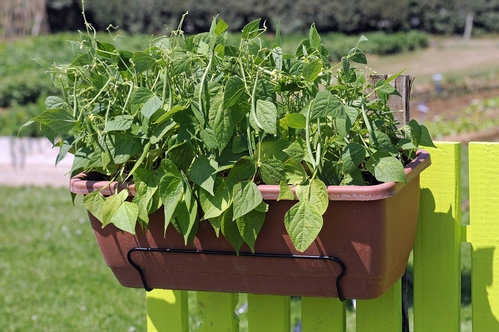
Mascotte Bean Photo courtesy All America Selections

Mascotte Bean
Photo courtesy All America Selections

Seven plants were selected for AAS vegetable winners; ‘Mascotte’ green bean, ‘Mama Mia Giallo’ pepper, ‘Chef’s Choice Orange’ tomato, and ‘Fantastico’ tomato were selected as national winners.  ‘Mascotte’ is a great dwarf French bean that is adapted for window boxes and container gardens.  ‘Mama Mia Giallo’ has large yields of uniform shaped, long tapered, gold/yellow fruit.  “Chef’s Choice Orange’ is an heirloom-type, indeterminate, orange, hybrid tomato.  ‘Fantastico’ tomato is a very flavorful unique determinate bush tomato.  Each plant produces up to 12 pounds of fruit.  ‘Pick A Bushel’ cucumber, ‘Mountain Merit’ tomato, and ‘Rivoli’ radish were selected for regional winners. ‘Pick A Bushel’ was selected due to its early fruit set and prolific production on a bush type cucumber that only spreads 24”.  ‘Rivoli’ yields uniform, round root 1 ½” in diameter.  ‘Mountain Merit’ is a disease resistant cultivar that offers medium to large, round, red tomatoes.

All America Selections have done all of the dirty work for you.  They have tried and tested many cultivars to help the home gardener select the newest plant material for the garden.  Visit http://www.all-americaselections.org/winners/index.cfm to find out more about AAS and previous award winners.

For more information contact Elizabeth Killinger at elizabeth.killinger@unl.edu, 308-385-5088, on Facebook, Twitter, her blog at https://huskerhort.wordpress.com/, or visit the University of Nebraska-Lincoln Extension website: hall.unl.edu.


Leave a comment

Preparing Gardens for Fall

Don't forget about the pumpkins. Photo courtesy of Lancaster County Extension

Don’t forget about the pumpkins. Photo courtesy of Lancaster County Extension

The presence of frost usually means that your vegetable garden is either limping toward the finish line or has completed production for the year.  Fall is the perfect time to clean up the vegetable garden and its tools to prepare them for next year.

There are a few more tasks to complete before you put your gardening tools away for the winter.  Before you perform the actual clean-up of the garden, make notes about the year. Record the garden layout, cultivars that worked (or didn’t), and pests or diseases you encountered this past year.  This will help you next spring when it is time to plan the garden and help you to remember what vegetables were in which location for your crop rotation schedule.  The goal is to have a 3 year crop rotation plan.  This is where vegetables from the same plant family are rotated around different locations within the garden.  The objective is to avoid placing those plant families in one particular location for 3 years.

The actual clean-up of the garden is the next step.  Elimination of garden debris, like dead plant material, fruit ‘mummies,’ weeds, and rotting vegetables, can help to reduce disease, weed, and insect problems next year.  Remove and discard disease or insect infested plant material, but do not compost.  Compost piles do not reach high enough temperatures to kill all pathogens, like fungal spores and bacteria.  Discarding or burning the infected plant material will remove the pathogens that could potentially infect next years’ crops.  Removal of weeds with mature seed heads will not only improve the appearance of the garden, but also help remove the seed source for potential weeds in next years’ garden.

Adding organic matter can help improve soil composition.  Incorporating residues from healthy plants can act as a great source of organic matter, which can improve the texture of the soil.  These healthy plants can either be turned or tilled into the soil or tossed into the compost pile.  Organic mulches that were used in the garden, like straw, grass clippings, or even newspaper, can also be tilled into the soil.  Tree leaves are another great source for organic matter for the garden.  Leaves that are picked up with the lawn mower will break down faster once they are worked into the soil because they are chopped into smaller pieces.

Cages and trellises also need some clean up in the fall.  Support structures, like tomato cages or trellises, should be pulled out of the ground, cleaned up, and placed in storage for winter.  If you have had disease issues in the past, like blight in tomatoes, now is also an excellent time to disinfect the cages or trellises to keep them from infecting new plants next year.  A 10% bleach solution, alcohol wipes, rubbing alcohol, or even ready-to-use bleach wipes can be used to disinfect the cages prior to winter storage.

Speaking about putting your garden tools away for winter…it’s time for some end-of-the-year tool maintenance.  Digging tools, like shovels, hoes, pitchforks, and garden rakes, should have excess soil removed from them.  Any rust that is present can be removed using a wire brush and a little bit of elbow grease or an electric drill with a wire brush or sanding attachment. After rust is removed, renew or sharpen the edges and points with a mill file or grinding wheel.  For winter storage, apply a light coating of oil.  Tools can even be stored in a 5 gallon bucket filled with sand and oil.  Inspect the handles of your tools at the end of the season for cracks or splinters.  Replace the handles if necessary.  If the wooden handles are in good condition, they can be sanded and oiled at least once a year.  Use a fine grade sand paper to smooth the surface.  Remove any dust and rub linseed oil into the handle and allow it to soak in.  Keep applying until the oil doesn’t absorb any more.  Wait a half hour, and dry off any oil remaining on the surface.

For more information contact Elizabeth Killinger at elizabeth.killinger@unl.edu, 308-385-5088, on Facebook, Twitter, her blog at https://huskerhort.wordpress.com/, or visit the University of Nebraska-Lincoln Extension website: hall.unl.edu.


Leave a comment

Black Gold… aka Compost

Turning Compost.  Photo from byf.unl.edu

Turning Compost. Photo from byf.unl.edu

Fall will be here before we know it.  Many things change as we get closer to autumn.  The leaves begin to change, the gardens are finishing production, the landscape is getting ready to be put to bed for the season, and the compost pile continues to grow.  Compost pile?

Compost is created from the leftovers in your landscape.  Leaves, small twigs, and grass clippings can all be gathered together in the fall and turned into a high quality material than can be used in several different ways.

Composting garden waste not only helps the environment, but also your wallet.  Composting garden waste and leaves allows nature to do the hard work in a simple, inexpensive way, and keeps you from hauling away the materials to the landfill.  A well-made compost heap creates an environment where decay causing bacteria live and reproduce to convert manure, leaves, and grass into dark, rich humus.  During the composting process, the carbon in the plant material is broken down, which produces heat.  Temperatures in a pile can reach 160 degrees Fahrenheit.  If properly maintained, the high temperatures can kill weed seeds and other undesirables found within the pile without much smell.

There are rules for the materials that go into a compost pile.  Leaves, grass clippings, straw and non-woody plant material are all great additions to the pile.  Branches, logs, and twigs that are larger than ¼” can be included, but the must be shredded or cut into smaller pieces first to help in the decomposition process.  Kitchen waste like vegetable scrapes, coffee grounds, and eggshells are other ingredients that can be included in the compost pile.  Materials like pet feces, meat, bones, grease, whole eggs, and dairy products are some items that should be kept out of the pile.  These materials can cause a health threat or attract unwanted visiting wildlife.

To have a properly working compost pile, it needs to be the right size.  The pile should be large enough to hold heat, but yet small enough to allow good air circulation to its center.  Generally a compost pile should be at least 3’ tall, 3’wide, and 3’long in order to hold enough heat.  The height and width should be no more than 5’ to allow air to circulate to the center of the pile.

Layering is a key component in building a compost pile. Before building, put base layer of 4-6” of chopped brush or other course material over the soil in the area you be placing the pile.  This will help with the air circulation under the pile.  On top of that, put a 3-4” layer of low carbon organic matter, green material like grass clippings.  Follow that with at 4-6” layer of a high carbon organic matter, brown material like leaves or garden waste.  Both layers should be damp to the touch, so add water accordingly.  The material should be damp enough that a drop or tow of liquid is released from a handful when squeezed.  Finish with a 1” layer of garden soil or finished compost.  This will introduce the microorganisms that are needed to break down the organic matter.  Before adding more material to the pile, mix all but the base layer together.  This will help even the decomposing within the pile.  Keep repeating the layering process until you create the desired size of the compost pile.

Compost piles can have as little or as much maintenance as you want to put into it.  The lowest maintenance is a ‘passive pile,’ or a pile that is just left alone.  Actively turned piles will keep the conditions right for a quicker breakdown of plant debris.  With active piles, the compost is turned about once a week using a pitchfork, mixing the new debris with the old.  Piles that are excessively turned will not keep consistent temperatures and the compost will take longer to develop.  Also maintain the proper moisture level of about 50%, 1-2 drops squeezed out of the matter.

‘Black Gold’ or finished compost has many uses.  It is dark brown, crumbly, and earth smelling.  There still may be some small pieces of leaves or other ingredients that may be visible.  The possibilities are endless to what you can do with compost.  It can be used to amend soils, as a component in soil mixtures for container, as a topdress fertilizer for the garden, mulch, or even for a compost ‘tea’.

There are just as many techniques for making compost as there are uses for it.  The key is finding the right way that works for you.

For more information contact Elizabeth Killinger at elizabeth.killinger@unl.edu, 308-385-5088, on Facebook, Twitter, her blog at https://huskerhort.wordpress.com/, or visit the University of Nebraska-Lincoln Extension website: hall.unl.edu.


Leave a comment

Spring Vegetable Gardening Help

As we get closer to the average frost free date, it is time to be thinking about finally putting some plants in our vegetable gardens. To ensure a successful growing season and harvest, there are a couple of rules to follow.

Crop rotation is one good practice to follow. Rather than putting the crops in the same location every year, crop rotation moves the locations where different plant families are put in the garden. Moving the plant families around can help to reduce insect and disease damage which tends to increase when the host plant is continuously grown in the same location. A good crop rotation schedule should rotate the plant families around so they aren’t grown in the same location for about three to five years. The difficult part is knowing what vegetables are related. A quick ‘family tree’ will help you know which plants in the vegetable garden are related and to help with crop rotation.

  • Fabaceae (Bean) family- pea; snap, cow, and fava bean
  • Brassicaceae (Cabbage) family- cabbage, broccoli, cauliflower, Brussel sprouts, collards, kale, turnip, rutabaga, kohlrabi, Chinese cabbage, radish
  • Cucurbitaceae (Cucumber) family- cucumber, summer squash, winter squash, cantaloupe, watermelon
  • Chenopodiaceae (Goosefoot) family- beet, Swiss chard, spinach
  • Liliaceae (Lily) family- onion, garlic, leek, shallot, chive
  • Apiaceae (Parsley) family- carrot, celery, celeriac, parsnip, fennel
  • Solanaceae (Nightshade) family- tomato, eggplant, pepper, potato, tomatillo

Just how early can you plant in the garden? Some crops could have actually been planted over a month ago, but that doesn’t mean they were immune from the cold temperatures and snow. The best way to determine planting date is to check soil temperatures. Seeds have a minimum, maximum and optimum soil temperature at which they will germinate and seedling growth begins. If planted too early, when soil temperatures are cold, seed germination and seedling growth will be very slow leading to seeds rotting, damping off disease, or low vigor plants with lower yields. Know what minimum and optimum temperatures are needed for different vegetables and monitor soil temperatures to determine the best time to seed. Planting early does not guarantee an earlier harvest if soil temperatures are too cold for germination. If you don’t have a soil thermometer handy, there are some general timelines to follow:

  • 60 days before average last spring frost date – collard, onion sets, garden pea, radish, spinach, turnip
  • 50 days before average last spring frost date – swiss chard, leek, mustard, potato
  • 40 days before average last spring frost date – beet, cabbage transplants, carrot, lettuce
  • 30 days before average last spring frost date – broccoli, Brussel sprout, and cabbage transplants; Chinese cabbage
  • 10 days before average last spring frost date – sweet corn, sweet potato, tomato transplants
  • Average last spring frost date – bean, cucumber, eggplant transplants, muskmelon, pepper, pumpkin, summer squash
  • 10 days after average last spring frost date – okra, watermelon

Before we know it, warm weather and spring-like temperatures will be here to stay. With a little bit of help, you can guarantee a healthy and productive vegetable garden.

For more information contact Elizabeth Killinger at elizabeth.killinger@unl.edu, 308-385-5088, on Facebook, Twitter, her blog at https://huskerhort.wordpress.com/, or visit the University of Nebraska-Lincoln Extension website: hall.unl.edu.