Husker Hort

A Nebraska View of Horticulture


Leave a comment

ReTree Nebraska Week 2014

Plant it forward.

Plant it forward.

Every good Nebraskan knows we are the home of Arbor Day. Did you know we also have another opportunity to celebrate trees? ReTree Nebraska week is dedicated to trees. Find out why we should re-tree Nebraska and how you can take part in this week long celebration from September 22st – 27th.

ReTree Nebraska is a cooperative initiative of the Nebraska Forest Service, Nebraska Statewide Arboretum, University of Nebraska Rural Initiative, University of Nebraska–Lincoln Department of Agronomy and Horticulture, and Nebraska Community Forestry Council. It is a 10-year cooperative initiative which will raise public awareness of the value of trees, reverse the decline of Nebraska’s community tree resources, and improve the diversity and sustainability of trees in communities across the state that will last for generations to come.

Severe weather, drought, poor planting practices or species selection, insects, disease and an aging tree population all have contributed to the decline in the number of community trees across the state. Planting new trees is an essential part of maintaining Nebraska’s community forest, and fall planting offers important benefits.

Just because we are a ‘Prairie State’ doesn’t mean that we don’t have or need trees. Across Nebraska, there are about 470,000 acres of community forests. These trees were planted by previous generations who understood the long-term benefits they would provide, such as cleaner air, healthier soil and wildlife habitats. Planting a tree provides much-needed shade during hot Nebraska summers, which helps reduce energy costs for homeowners, schools and businesses. Every dollar invested in the community forest returns an average of $2.70 in net annual benefits. Nearly $9.7 billion in environmental, social and economic benefits are provided by 13.3 million trees in Nebraska communities, but that’s half the number of trees that were present 30 years ago.

Fall is an optimal time for tree planting. “Fall is a great time to plant trees in Nebraska because there are fewer demands on the roots, allowing trees to establish their root systems and get a jump start on spring growth,” according to Jessica Kelling, ReTree Nebraska coordinator.

When selecting a tree species, Kelling recommends considering a couple of key factors. Plant a different species than what is already growing in adjacent areas. “Enjoy the two weeks of fall color your neighbor’s red maple provides, but select a tree for your yard that provides some variety in leaf texture, form and fall color to create a diverse landscape year round.” Kelling also urges homeowners to take a tree’s mature height and width into consideration when selecting a species for planting. “Go to the planting site and look up, down and around for conflicts with buildings, utility lines and even other trees.”

If you are looking for a good tree to plant this ReTree Week, ReTree Nebraska has “Fourteen for 2014,” a list of underutilized tree species. The trees are broken down by size and type and include:

Evergreen- Concolor fir—Abies concolor, Black Hills spruce– Picea glauca var densata, Ponderosa Pine—Pinus ponderosa

Small to Medium Deciduous Trees- Shantung maple—Acer truncatum, Miyabe maple—Acer miyabei, Gamble Oak- Quercus gambelii, Japanese or Pekin Tree lilac-Syringa reticulate (‘Ivory Silk’) or Syringa reticulate ssp. pekinensis (Copper Curls®)

Large Deciduous Trees- Kentucky coffeetree—Gymnocladus dioicus, Northern catalpa—Catalpa speciosa, Baldcypress—Taxodium distichum, Bur oak—Quercus macrocarpa, Chinkapin oak—Quercus muehlenbergii, English Oak—Quercus robur, Elm hybrids—Ulmus x (‘Accolade’, ‘Cathedral’, ‘Frontier’, ‘New Horizon’, ‘Pioneer’, ‘Triumph’, ‘Vanguard’), Black or Bigtooth Maple- Acer nigrum or Acer grandidentatum

We can work together to celebrate this week as well as support a grassroots, or rather tree roots, Nebraska initiative. To learn more about ReTree Nebraska, report a tree planting, or find out more about tree selection, planting and care, visit www.retreenebraska.unl.edu or email retreenebraska@unl.edu.

For more information contact Elizabeth Killinger at elizabeth.killinger@unl.edu, 308-385-5088, on Facebook, Twitter, her blog at https://huskerhort.wordpress.com/, or visit the University of Nebraska-Lincoln Extension website: hall.unl.edu.
Leave a comment

Fruit Trees for Nebraska

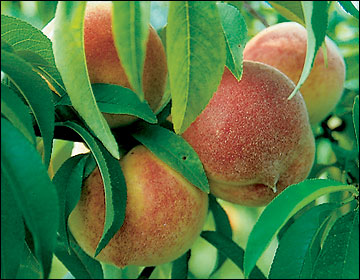
Redhaven peach- photo courtesy from extension.missouri.edu

Redhaven peach- photo courtesy from extension.missouri.edu

Spring is in the air. The apples are blooming, bees are buzzing, and the threat of frost has passed. There is nothing better than the spring blooms on an apple and eating a piece of fruit fresh off your own tree in the fall. There are few rules to keep in mind when selecting fruit trees for your landscape.

The words location, location, location have never been more important than with the site for your fruit trees. The performance of the fruit tree all depends on how well their growing requirements are meant. Fruit trees require full sun, at least 8 hours a day. They also require enough space between the trees so shading isn’t an issue. Low lying areas, or frost pockets, should be avoided. These areas can allow cool air to settle, and increase the risk of frost or cold damage. South facing slopes with some earlier blooming fruit trees, like apricot, should also be avoided. These slopes warm up faster in the spring, which could mean an earlier bloom that is susceptible to frost damage.

The use of the crop is another factor to consider. On average a dwarf apple tree can produce 50 to 150 pounds of fruit and tart cherries can produce 40-120 pounds. The use of the crop, whether it’s fresh, cooking, canning, or freezing, will make a difference in the amount of fruit you can utilize before it goes bad. Start small, you can always plant more trees later.

After the perfect location is selected and the number of trees is decided; cultivar selection is the most important task. Fruit tree cultivars should be selected based upon their vigor, productivity, climate adaptability, fruit quality, disease resistance, and personal preferences. All fruits are susceptible to insect pests and disease organisms. Some cultivars of apples and peaches are productive only under the careful use of a regular spray program of a combination fungicide and insecticide product. Spraying at specific times throughout the growing season may be needed because many pests attack different fruits multiple times. If ‘grocery store’ quality fruit is your goal, be prepared to apply the fruit tree sprays routinely throughout the growing season to protect the fruit on those susceptible cultivars from pests. If less-than-perfect fruits are okay or resistant cultivars are selected, the spray schedule could be omitted.

Apples are commonly infected by cedar apple rust and apple scab. There are several options to preventing cedar apple rust in apples. One option is to remove all cedar trees within a 2 mile radius of the tree. Fungicide applications can also be applied to the cedars, apples, or both routinely when the fungal fruiting bodies are present. The last option, and the easiest when planting new trees, is to select a cultivar of apple that is resistant to those diseases. Some cultivars that are both apple scab and cedar apple rust resistant include Liberty and Enterprise.

Peaches in Nebraska are a fruit that everyone wants to grow. The sad part is that peaches are not long lived in Nebraska. In a commercial setting a peach tree will live, on average, 8 years. They also take a couple of years to become productive and are susceptible to peach tree borer, oozing bacterial canker, and late spring frost damage. If you decide to try a peach, Redhaven, Reliance, and Madison are the most commonly planted cultivars.

Fruit trees can be grown successfully in Nebraska. Proper site and cultivar selection are just a few important considerations to keep in mind when picking out fruit trees for your landscape.

For more information contact Elizabeth Killinger at elizabeth.killinger@unl.edu, 308-385-5088, on Facebook, Twitter, her blog at https://huskerhort.wordpress.com/, or visit the University of Nebraska-Lincoln Extension website: hall.unl.edu.


Leave a comment

Spring Spruce Problems

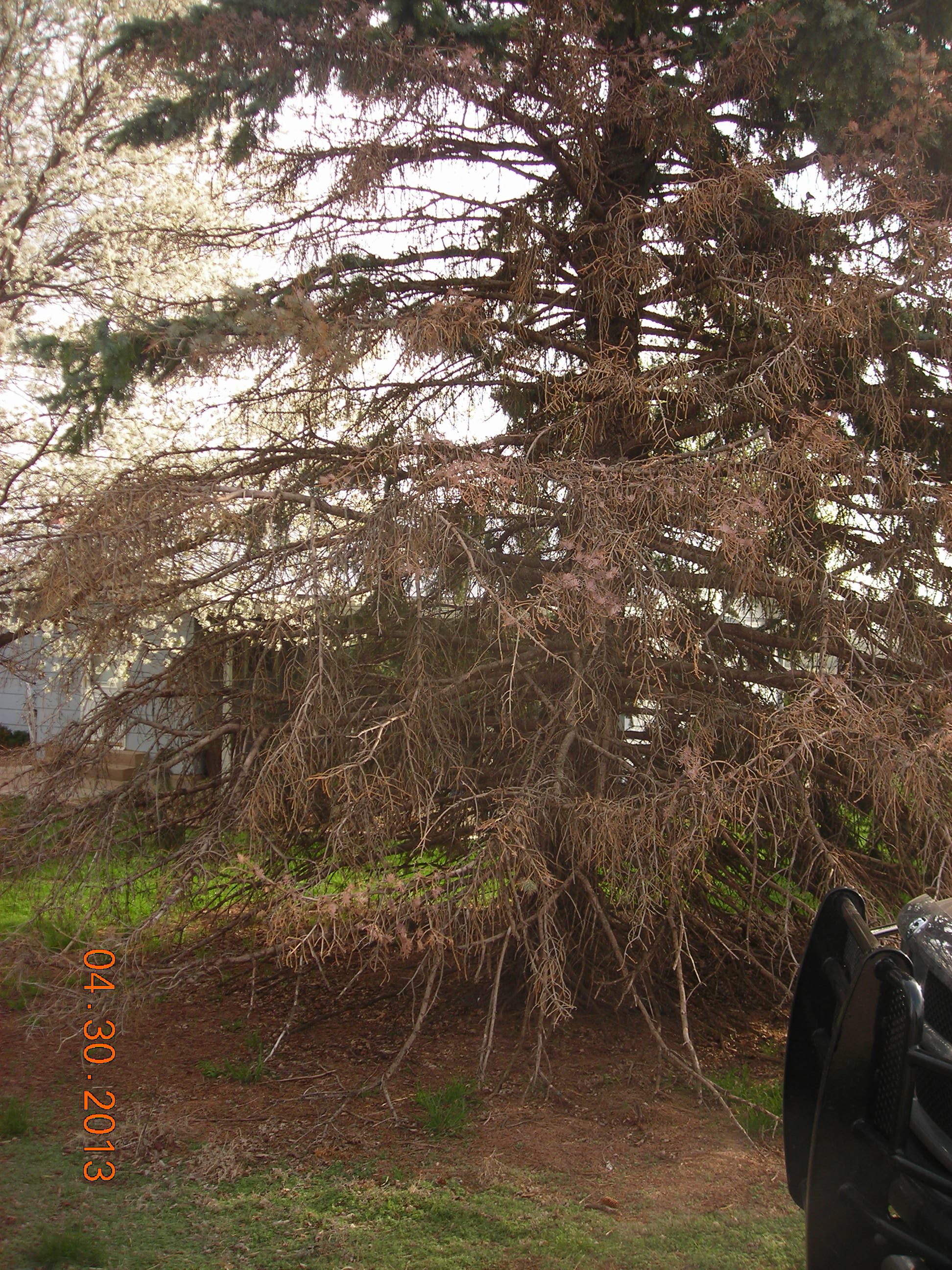
Have you noticed lately that your spruce has white-tipped or brown needles? Rachel Allison, western forest health assistant with the Nebraska Forest Service noticed this when traveling in western Nebraska as well as in the trees near her office in North Platte. She explained that understanding where spruce trees prefer to live tells us a little about the cause of this problem.

The commonly planted spruces – Colorado, White, Engelmann & Norway – typically grow on north and east facing mountain slopes, usually at high elevations where snow

A client's spruce tree

A client’s spruce tree

stays around for several months of the year. These high elevations make the trees cold tolerant, but the cold, moist conditions are very different from the hot, dry sites where many spruce are planted in landscapes and communities. Spruce prefer good, deep soil and growing among other trees that can protect them from hot, dry winds.

People often believe that spruce will do well in a xeriscape or low water landscape. But since spruce are adapted to a moist environment, the trees are often stressed from the dry conditions and competition with turf and other plants. In addition, spruce trees growing in low elevations with low humidity and high temperatures lose water through their needles faster than the water can be replaced by the roots. The stress caused by this lack of water in the needles often causes the needles to have a brown or purple cast, particularly during the summer when combined with the sun and heat. Right now, Allison notes, “the same situation happens in the winter, this time the lack of soil moisture leads to the white-tipped or brown needles. Both of these conditions are the trees’ way of showing us they need water.”

In addition, when spruce, or any plants for that matter, are planted in landscapes outside of their normal habitat or range, they can become additionally affected by poor site conditions, improper planting (usually planting too deeply), environmental problems, and insect and disease attack. Environmental causes are typically the biggest problems and commonly come from transplant shock, mounding mulch around the trunk, under or over watering, winter desiccation, frost damage, hail damage, salt toxicity, herbicide damage and nutrient deficiency.

Often a pest or an easily seen problem is pointed to as the cause of a tree’s poor condition, but the main long-term underlying problem is missed–that the tree is not suited to its environment. In order to help the tree adapt, we need to provide an environment that is more suitable for it. This includes planting the tree properly and at the proper depth, using a flat area of mulch in a wide ring around the tree that is not mounded up on the trunk, and watering properly. For spruce, watering is the most critical.

Trees compared to turf have root systems that spread deeper, typically down to 24 inches; and the best way to water is to do it less frequently but for longer durations. The amount of soil with good available moisture can be determined by pushing a long screw driver or slim metal rod into the soil until it stops when dry soil is reached. Allison has found that the depth to dry soil in a yard typically ranges from 1 to 6 inches, and rarely up to 8 inches, but none of these are adequate. The target for good available moisture is within the top 12 to 18 inches of soil. Watering to provide the deep soaking needed to accomplish this should be carried out once a week during hot summer months (July, August) and less frequently in the cooler months. As Allison explained, “all trees would really rather be watered once or twice a month with a good long rainfall, but when that doesn’t happen, we need to provide the necessary water ourselves.”

Trees typically do not get the water they need from an automatic irrigation system, because the system is set up to manage and care for the lawn, not the trees. The watering cycle is short and frequent, providing shallow moisture for turf, but not deep enough for trees. The amount of water needed by trees in your lawn and how long it takes to provide it depends on your soil type; usually with more water needed for sandy soils and less for clay soils. It is important to periodically check the level of moisture in your soil near the dripline of your trees.

If reducing the cost of water is a goal, you can actually apply less water and still maintain soil moisture at good levels by providing a level, mulched area around your trees out to the dripline of the tree. When mulch covers the soil, it helps to retain the moisture that would otherwise be pulled out by drying winds or from nearby grass.

The best advice when using automatic irrigation systems is to separate your landscape into different zones depending on different watering needs. Place spruce and other plants that need deep watering together. Water them deeply and no more than once or twice per week. Avoid daily, shallow watering that can cause problems by leaving deeper soil areas still dry.

For more information contact Elizabeth Killinger at elizabeth.killinger@unl.edu, 308-385-5088, on Facebook, Twitter, her blog at https://huskerhort.wordpress.com/, or visit the University of Nebraska-Lincoln Extension website: hall.unl.edu.


Leave a comment

2014 Turf Winterkill Outlook

We may have loved the fact that this winter we didn’t have to scoop much snow, but your turf isn’t quite so happy. The open winter may have wreaked havoc on lawn, greenspaces, athletic fields, and golf courses in the area. Find how what to be on the lookout for and how you can help to ensure a healthy green lawn this upcoming season.

In a ‘normal’ winter the turf is usually protected from the extreme conditions. Snow cover helps to not only provide much needed moisture to the thirsty turf, but it also helps to blanket and protect turf from the biting winter winds. This winter, there wasn’t much snow to protect turf and there were definitely the harsh winds.

The lack of snow cover can be a contributing factor to winterkill in turf. Winterkill is a general term that is used to define turf loss during the winter. Winterkill can be caused by a combination of factors including crown hydration, desiccation, low temperatures, ice sheets and snow mold. UNL Turfgrass Specialists were prepared to educate about winterkill, but they weren’t prepared for the extent of damage that they are seeing.

There are a few factors that can play a role in the degree of the damage in the lawn. Low mown turf, like those on golf course greens, tend to be more susceptible to winterkill. Turf that was seeded last fall, had heavy traffic over the winter, and locations exposed to winter winds are also affected by winter damage or winterkill.

Winterkill on turf throws a wrench in all of my previous preemergence herbicide recommendations. Normally, I would recommend dual applications of preemergence herbicide for the most effective control of crabgrass and other weedy grasses in the lawn. The first application is usually applied any time after March 1 with the second application in early June.

This year, wait to apply preemergence applications until after the turf has greened-up. There is no rush to apply the preemergence herbicides now. Make sure that there isn’t any winterkill on your turf before you apply preemergence herbicides. Applications of preemergence herbicides applied as late as mid-April to early May are still effective for our area.

There is one major reason for holding off on applying preemergence herbicides. These products can limit your options when it comes to a lush green lawn yet this spring. If a preemergence herbicide has been applied to the turf prior to overseeding, it can keep the turf seeds from germinating along with the weedy grass seeds.

If your lawn has suffered this winter or been killed by winterkill, there is still time to overseed yet this spring. Overseeding or renovating lawns can help to fill in a sparsely growing lawn or one suffering from winterkill. If you decide to overseed, there are a few rules to follow. Kentucky bluegrass can be overseeded throughout the month of April at a rate of .75 to 1 pound of seed per 1,000 square feet. Tall fescue lawns that have been thinned can be overseeded at a rate of 4 to 6 pounds of seed per 1,000 square feet starting April 15 through June 15th. If renovation of the entire lawn is chosen, use the full seeding rate. Kentucky bluegrass’s full rate is 3 to 4 pounds of seed per 1,000 square feet. Tall fescue seeding rate is 4 to 6 pounds of seed per 1,000 square feet.

Waiting to apply preemergence herbicides may be tough to do, but it can save you a headache in the long run.

For more information contact Elizabeth Killinger at elizabeth.killinger@unl.edu, 308-385-5088308-385-5088, on Facebook, Twitter, her blog at https://huskerhort.wordpress.com/, or visit the University of Nebraska-Lincoln Extension website: hall.unl.edu.

Leave a comment

Snow, Ice, and Everything Nice!

Frost Damage by Paper Boy- Photo Zac Reicher

Frost Damage by Paper Boy
Photo Zac Reicher

Winter can be a beautiful time of the year.  The gracefully falling snow or frost on the plants in the morning sun can be an attractive sight to some.  To others, it just means more work outside.  Regardless of how you feel, these winter conditions should remind everyone to think about their turf this winter.  That’s right, I said turf.  While the frost and snow are pretty, there are some steps that you can take now to ensure a beautiful looking lawn come spring.

Frost can do more than cause you to scrape your windshield.  Walking or driving across frozen turf may seem safe enough, but it can actually cause damage to the lawn which will be visible come spring.  When the grass blades freeze, they become brittle.  There are many theories as to how the frost damages the living turf tissues, but the most common belief is that the ice crystals damage the plants’ cells when they are forced into the leaf by the weight of a foot or wheel.  Early morning dog walkers, newspaper deliverers, golfers, or joggers can do significant cosmetic damage on frosted turf.  If done repeatedly, this could mean reseeding the area come spring.

It is fairly easy to spot the depressed footprints in the frosted turf, but once the frost melts the damage has a little different appearance.  The damage to the frozen turf first appears as a blackening of the leaves which gradually turns to a brown or tan color.  There is some good news though.  In the spring, turf suffering from damage due to foot traffic while frozen will normally recover after two to four mowings.

Snow may mean more work for some people, but it can be beneficial to turf.  A blanket of snow across the turf can help to protect it from the harsh winter winds and help to insulate it from the freezing temperatures.  On the other hand, snow can also cause damage to lawns.  Heavy piles of snow and deicers are often the culprits.  When scooping, avoid heaving piles of snow on the turf.  Snow that has fallen naturally isn’t as dense and compacted as shoveled snow can be.  If possible, try to disperse the snow and avoid the tall heavy piles.

Building a snowman is another fun snow-time activity that could also have an effect on your turf.  The densely packed balls of snow melt slower than the rest of the snow on the ground.  After a warm spell just Frosty remains.  These remnants of a fun afternoon could also cause damage due to the weight of the heavily compacted snow and the slower melting of the large snowballs.  To avoid Frosty’s revenge, break up the snowballs left by the snowman as the temperatures warm up and the surrounding snow begins to melts.

Take precautions now with these winter-time activities to keep you lawns looking their best this coming spring.

Upcoming Programs:

Extension Master Gardener Program- Two training sessions will be held at the UNL Extension in Hall County meeting rooms in Grand Island.  Session 1: Tuesday evenings, February 11 through March 25, 6:00 to 9:00 PM.  Session 2: March 17, 19, 21, 24, 26, and 28 from 9:00 a.m. to 4:00 p.m.  Please contact Elizabeth Killinger, 308-385-5088, with any questions about the program.  Registrations are due prior to January 17 with the session you are interested in attending.  More information, updated schedules, and an application can be found at http://hall.unl.edu

For more information contact Elizabeth Killinger at elizabeth.killinger@unl.edu, 308-385-5088, on Facebook, Twitter, her blog at https://huskerhort.wordpress.com/, or visit the University of Nebraska-Lincoln Extension website: hall.unl.edu.

Leave a comment

Central Nebraska Extension Master Gardener Program

NEMasterGardener-logo-m-sqDo you enjoy plants and gardening?  Looking to learn more and hone your skills but don’t know where to go?  The Master Gardener program will educate you on many aspects of horticulture, allow you to test your knowledge and skills, all while serving your local community.

The Nebraska Extension Master Gardener program is a horticulture related volunteer training program based in many counties throughout the state.  It has been part of University of Nebraska- Lincoln (UNL) Extension since 1976.  Master Gardener volunteers are trained by UNL Extension faculty and staff. They contribute time as volunteers working with their local Extension office to provide horticulture-related information to their community. Participants are required to complete 40 hours of training and 40 hours of volunteer service during the initial year of their involvement in the program. Master Gardener volunteers retain their certification through annual training and volunteering.

Volunteer hours can be completed through various activities.  These activities could include: planting and maintaining demonstration gardens, collecting data on research projects, helping with county and state fair activities, speaking to community groups, leading garden tours, collecting plant samples, answering phone questions, teaching youth programs, or whatever sparks your interest and utilizes your talents.

Educational topics will cover a wide range of horticultural issues.  Topics that have been covered in previous training sessions include: native plants for water conservation, an in-depth look at fertilizers, turfgrass and related insects, beneficial pollinating insects and vegetable garden pests, tree and shrub pruning, pesticide safety and non-chemical pest control techniques, and small fruits and tree fruit basics.  The content of the topics is focused on the home gardener, but those employed in the green industry are also welcome.

Are you interested in becoming a Master Gardener? University of Nebraska-Lincoln Extension in Hall County will be offering two Master Gardener training sessions at the Hall County Extension Office meeting rooms in Grand Island. The first session will offer six trainings on Tuesday evenings February 11 through March 25, 6:00 to 9:00 p.m.  The second session will be held March 17, 19, 21, 24, 26, and 28 during the day from 9:00-12:00 a.m. and from 1:00-4:00 p.m.  Individuals who wish to become new Master Gardeners the fee is $160.  With that fee the Master Gardener interns receive a large resource notebook, an integrated turfgrass management book, a short-sleeved t-shirt, and a name tag.  The fee will also help fund handout materials, speaker travel expenses, room rental, and other costs associated with the training program.  For returning Master Gardeners, the fee is $15 to help fund costs associated with the training program.  The ProHort program is for green industry professionals and has a fee of $325.  ProHort participants will receive a large resource notebook, an integrated turfgrass management book, and 40 hours of education.  The general public is also welcome to attend sessions for a fee of $5 per person for each training session.  Please contact Elizabeth Killinger, 308-385-5088, prior to January 7 with the Master Gardener training session you are interested in attending.  More information, updated schedules, and a brochure can be found at http://hall.unl.edu


Leave a comment

Avoiding Winter Desiccation

bluesprucecjlgThe holiday season is upon us. We all had our fill of turkey and fixings, Black Friday is finished, and Cyber Monday is just around the corner.  You have worked hard all year to make sure your trees look their best and now is not the time to stop.

Winter is often an overlooked season when it comes to working in the landscape.  Providing supplemental irrigation during the winter months can help sensitive plants make it through the winter a little less stressed and with less winter desiccation injury.

Not all plants are susceptible to winter desiccation.  Winter desiccation happens when the plants’ roots aren’t able to soak up enough water to replace the moisture lost through the leaves.  This often results in plants having areas of yellowish/tan colored leaves come spring.  Woody plants with shallow root systems are usually the hardest hit.  Spruce, fir, pine, arborvitae, yew, Oregon grape-holly (Mahonia), holly, and boxwood are some of the more common evergreen plants that would benefit from supplemental winter irrigation during extended dry seasons.

The plant’s location within the landscape can have an effect on its potential for winter damage.  Plants that receive reflected heat from buildings or walls will be more susceptible to damage.  The reflected heat from the building can warm up the area and plants surrounding it, leading to an increase in moisture lost.  Exposure to north and west winter winds can also have an effect.  Plants that are exposed to the winter winds will often only have desiccation injury on the side that is more open to the winds.

There are a few steps that you can take to prevent winter desiccation.  For starters, make sure that the plants go into winter well watered.  It may be too late for that this year, but it isn’t too late to provide supplemental water this winter.  There are some rules to providing supplemental irrigation in the winter.  Water should only be applied when the daytime air temperatures are above 40 degrees F.  Try to apply the water in the middle of the day and allow it plenty of time to soak into the soil profile before the temperatures drop below freezing.  If it is not given ample time to soak in, there could be a resulting layer of ice on the soil’s surface that could cause some damaging effects on the trees roots and possibly surrounding turf.

Timely applications of an antidesiccant on the most susceptible plants can also help to ease winter desiccation injury.  Antidesiccant products, like wilt-pruf, reduce the amount of moisture that is lost through evergreen foliage.  They coat the needles of the plant with a light weight polymer substance that prevents water from leaving the foliage.  These products usually last about 5 or 6 weeks before they degrade in the sun and elements.  Antidesiccant products are commonly put on newly planted trees, those that are exposed to winter winds, or those that receive reflected heat.  Aim to apply these products beginning around Thanksgiving and reapply throughout the winter.  For best results, antidesiccants should be applied when air temperatures are above freezing so the liquid will dry on the leaf surface.  If you mix and spray antidesiccants yourself, be sure to clean out the sprayer thoroughly immediately after the application.  These products can form a glue-like mass inside the sprayer that will harden in the lining and can clog spray nozzles.  A hot water and soap solution flush will help to prevent damage to the spraying equipment.

As we all know, there isn’t a ‘normal’ season in Nebraska.  Each year brings its own challenges to overcome.  Last year it was the summer drought, before that it was the holiday snow storm, and who could forget the New Year Eve ice storm.  Knowing your climate, plants, and what they require can help you to decide whether or not action needs to be taken.

For more information contact Elizabeth Killinger at elizabeth.killinger@unl.edu, 308-385-5088, on Facebook, Twitter, her blog at https://huskerhort.wordpress.com/, or visit the University of Nebraska-Lincoln Extension website: hall.unl.edu.


1 Comment

Fall Invaders

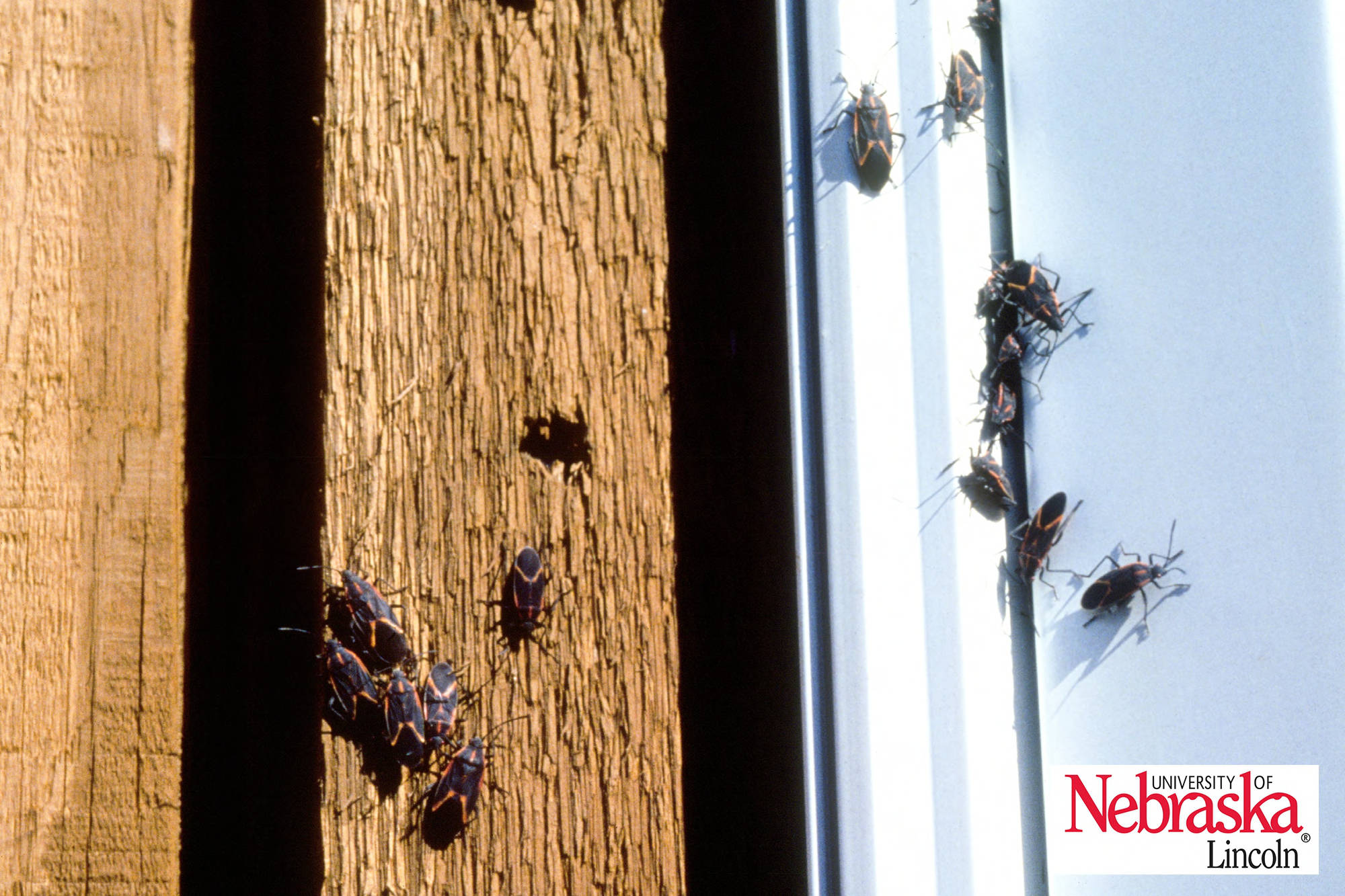
Boxelder Bugs around a window.

Boxelder Bugs around a window.

Warm days and cool nights signal that fall is here.  The pumpkins are ready to be picked, the leaves will soon be in full color display and the wolf spiders and crickets will start migrating into the home.  Not exactly what you had in mind for a peaceful fall?  Find out how to start preparing now to keep these invaders from making themselves at home in your home.

When the temperatures start dipping, the pests start coming in.  Nobody really wants to spend the winter outdoors and insects are no different.  Some of the more common nuisance pests, or occasional invaders, include boxelder bugs, multicolored Asian Lady Beetles, millipedes, and crickets.  These pests don’t do any harm inside the home; they are just looking for a cozy place to spend the winter.

Proper identification of the insect will assure the proper control method.  Boxelder bugs are black and orange true ‘bugs’ that can be found in large numbers around foundations sunning themselves or trying to find their way inside. Multicolored Asian Lady Beetles are the orange ‘lady bugs’ with black spots.  Their distinct smell and ability to bite makes them even more of a nuisance once inside the home.  Millipedes are often misidentified as ‘wire worms.’  These skinny, brown critters have two legs per body segment and will curl up when disturbed.  Crickets hop their way into homes and provide ‘music’ in the night with their chirping.  Commonly it’s the black field cricket that migrates inside, but there are others that follow right behind.

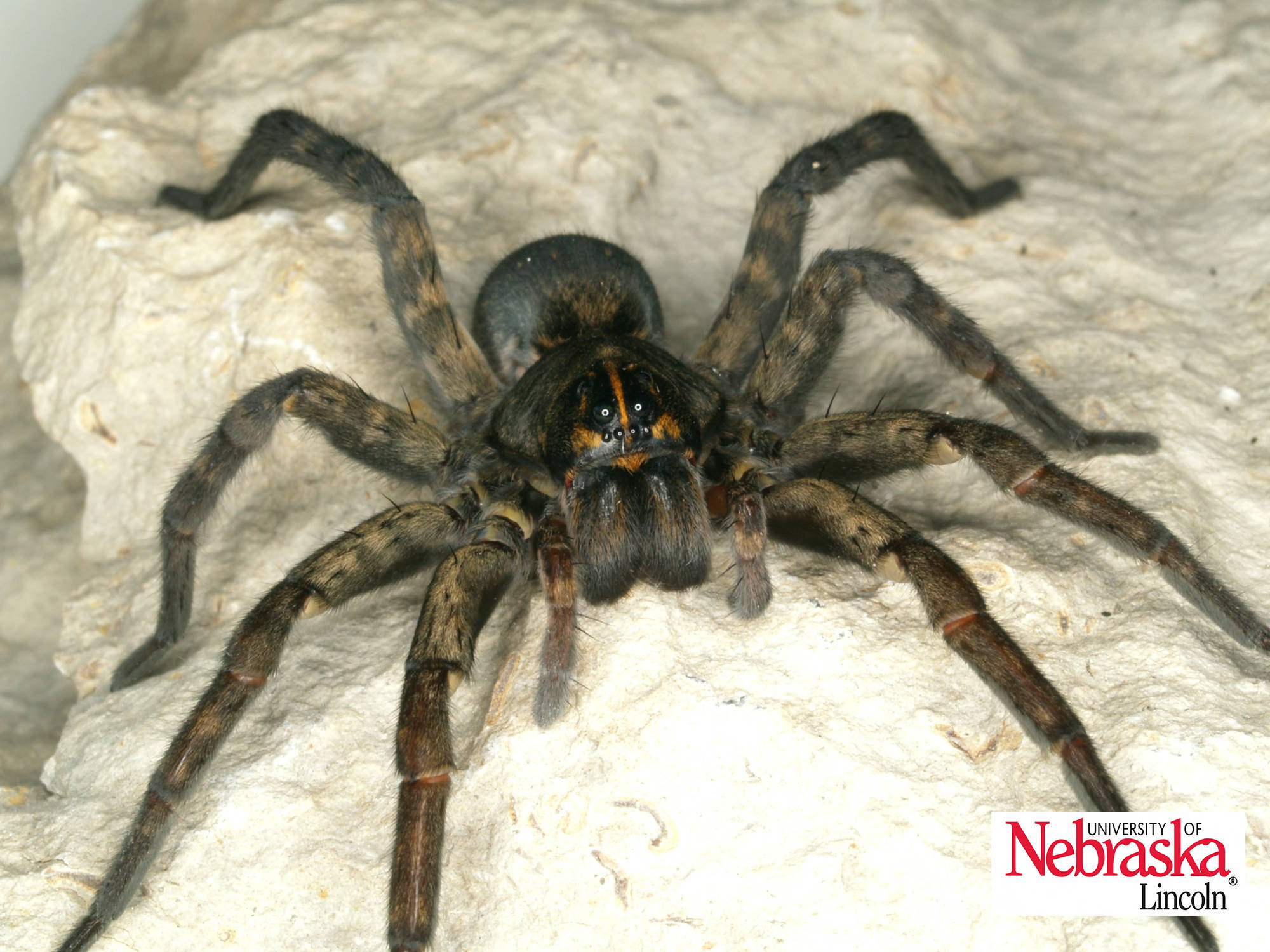
Wolf Spider

Wolf Spider

Wolf spiders may look scary, but they are more bark than bite.  These large, hairy spiders can be found both outdoors and occasionally inside the home.  They are not poisonous nor do they want to disturb people.  They are hunting spiders, so they don’t spin a web or a trap, but prefer to chase down their prey.  They often find their way into homes in the fall following their favorite food source the cricket.

The saying “an ounce of prevention is worth a pound of cure” has never been more true.  Discouraging occasional invaders from entering the house is going to take a little work, but it will be worth it in the long run.  Start by finding and sealing up any cracks or spaces they could enter through with silicone caulk or expanding foam.  Make sure that window screens are in good repair and that doors are tight fitting.  Also remove any dead plant debris from window wells.

Pests can be discouraged from entering the house in a number of ways.  The most common way is by applying an outdoor perimeter insecticide treatment.  These insecticides are labeled for various pests and often times have residual effects to help protect the house for longer.  Read and follow the label instructions on how and where these products should be applied.  Ideally, try to apply these insecticides out from the foundation about five to ten feet around the perimeter of the home. The insecticides will help to decrease the numbers of pests that make it inside the house, but don’t expect it to stop all of them.

Monitor the home regularly to see what pests have made their way inside.  Glue boards are sticky boards used to catch and hold pests as they try to move throughout the home.  Be sure to use sticky boards in locations where non-target animals, like pets, won’t get stuck in them.  If something other than the target pest does happen to get ‘caught’ in the trap, use an oily material, like vegetable or mineral oil, to dissolve the sticky substance on the trap.  When properly placed, these traps will allow you to see which pests are inside the home and their approximate numbers.

Once pests are found inside the home, there are a few techniques that you can use. The handy broom and dust pan or the vacuum are two techniques; they are also very environmentally friendly and very cost effective.  Be careful when selecting insecticides for use inside the home.  Read and follow instructions carefully as many of these products have to come into contact with the insect themselves and don’t offer much residual protection.

With a little prevention and monitoring you can ensure that you are sharing your home with wanted house guests this fall and winter.

For more information contact Elizabeth Killinger at elizabeth.killinger@unl.edu, 308-385-5088, on Facebook, Twitter, her blog at https://huskerhort.wordpress.com/, or visit the University of Nebraska-Lincoln Extension website: hall.unl.edu.


1 Comment

Celebrate ReTree Nebraska Week

Photo of Youth Planting a Tree in Lincoln, NE. (courtesy ReTree NE)

Photo of Youth Planting a Tree in Lincoln, NE. (courtesy ReTree NE)

Every good Nebraskan knows we are the home of Arbor Day.  Did you know we also have another opportunity to celebrate trees?  ReTree Nebraska week is dedicated to trees.  Find out why we should re-tree Nebraska and how you can take part in this week long celebration from September 22nd – 28th.

ReTree Nebraska is a cooperative initiative of the Nebraska Forest Service, Nebraska Statewide Arboretum, University of Nebraska Rural Initiative, University of Nebraska–Lincoln Department of Agronomy and Horticulture, and Nebraska Community Forestry Council.  It is a 10-year cooperative initiative which will raise public awareness of the value of trees, reverse the decline of Nebraska’s community tree resources, and improve the diversity and sustainability of trees in communities across the state that will last for generations to come.

Severe weather, drought, poor planting practices or species selection, insects, disease and an aging tree population all have contributed to the decline in the number of community trees across the state. Planting new trees is an essential part of maintaining Nebraska’s community forest, and fall planting offers important benefits.

Just because we are a ‘Prairie State’ doesn’t mean that we don’t have or need trees.  Across Nebraska, there are about 470,000 acres of community forests. These trees were planted by previous generations who understood the long-term benefits they would provide, such as cleaner air, healthier soil and wildlife habitats. Planting a tree provides much-needed shade during hot Nebraska summers, which helps reduce energy costs for homeowners, schools and businesses.  Every dollar invested in the community forest returns an average of $2.70 in net annual benefits. Nearly $9.7 billion in environmental, social and economic benefits are provided by 13.3 million trees in Nebraska communities, but that’s half the number of trees that were present 30 years ago.

Fall is an optimal time for tree planting.  “Fall is a great time to plant trees in Nebraska because there are fewer demands on the roots, allowing trees to establish their root systems and get a jump start on spring growth,” according to Jessica Kelling, ReTree Nebraska coordinator.

When selecting a tree species, Kelling recommends considering a couple of key factors. Plant a different species than what is already growing in adjacent areas. “Enjoy the two weeks of fall color your neighbor’s red maple provides, but select a tree for your yard that provides some variety in leaf texture, form and fall color to create a diverse landscape year round.”  Kelling also urges homeowners to take a tree’s mature height and width into consideration when selecting a species for planting. “Go to the planting site and look up, down and around for conflicts with buildings, utility lines and even other trees.”

If you are looking for a good tree to plant this ReTree Week, ReTree Nebraska has “Thirteen for 2013,” a list of underutilized tree species.  The trees are broken down by size and type and include:

Evergreen- Concolor fir—Abies concolor, Black Hills spruce– Picea glauca var densata,

Small to Medium Deciduous Trees- Shantung maple—Acer truncatum, Miyabe maple—Acer miyabei,  Gamble Oak- Quercus gambelii, Japanese or Pekin Tree lilac-Syringa reticulate (‘Ivory Silk’) or Syringa reticulate ssp. pekinensis (Copper Curls®)

Large Deciduous Trees- Kentucky coffeetree—Gymnocladus dioicus, Northern catalpa—Catalpa speciosa, Baldcypress—Taxodium distichum, Bur oak—Quercus macrocarpa, Chinkapin oak—Quercus muehlenbergii, English Oak—Quercus robur, Elm hybrids—Ulmus x (‘Accolade’, ‘Cathedral’, ‘Frontier’, ‘New Horizon’, ‘Pioneer’, ‘Triumph’, ‘Vanguard’), Black or Bigtooth Maple- Acer nigrum or Acer grandidentatum

We can work together to celebrate this week as well as support a grassroots, or rather tree roots, Nebraska initiative. To learn more about ReTree Nebraska, report a tree planting, or find out more about tree selection, planting and care, visit www.retreenebraska.unl.edu or email retreenebraska@unl.edu.

For more information contact Elizabeth Killinger at elizabeth.killinger@unl.edu, 308-385-5088, on Facebook, Twitter, her blog at https://huskerhort.wordpress.com/, or visit the University of Nebraska-Lincoln Extension website: hall.unl.edu.