
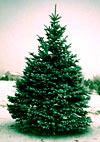
 Live Christmas trees add an unmistakable ambiance to the holidays. Now that the holidays are over, the time has come to let your tree perform a different task. Get good use out of your live Christmas tree for a while longer. Feeding birds has become a very popular pastime that can be done year round. There are three things to remember for bird feeding success: location, providing the correct feed and feeder for the bird you want to attract, and maintaining a constant availability.
There are a few steps you should take with your Christmas tree before you stick it outdoors for the birds. Remove all decorations, lights, and try to remove as much of the tinsel, if not all, if possible. The best location for the tree once outdoors is on the south or east side of the house. This will provide shelter from the harsh north and west winter winds. Be sure the tree is secure in its new location by setting the stump in the ground or bucket of damp sand and by attaching the top with twine to nearby buildings or trees.
Christmas trees can create a wonderful backyard habitat. The tree can provide shelter for the birds by protecting them from the wind and predators. It can also act as a feed station. For a fun winter project, make your own bird feeders. Popcorn, cranberry, and raisin strings are not only festive, but they also help to feed the birds. Popcorn will attract cardinals and finches, while cranberries and raisins attract cedar waxwings and any overwintering robins. Apples, oranges, leftover bread, and pine cones covered with peanut butter and rolled in birdseed also make great feeders.
The saying that works with real estate also works for bird feeders– location, location, location. Most birds prefer to feed when they are protected from the strong winds and where they can have areas with protective cover and perching sites. Trees and shrubs nearby offer excellent perching sites while evergreens provide great cover for birds to hide.
The types of feeders and the feed you offer will determine the types of birds that you will have visiting. Birds tend to be pretty picky with the type of feed and feeder that they prefer. Goldfinches are easy to attract if you use niger thistle seed in a clear tube-type feeder. Woodpeckers and nuthatches are fond of suet. Suet is a combination of animal fat, seeds, and other ingredients that attracts insect eating birds. It offers a quick source of energy for birds. Suet feeders are usually a plastic-coated wire cage. There are a wide variety of feeder types available at most home and garden centers or you can make your own. Pick a feeder that you enjoy looking at, is easy to fill, fits the type of bird you want to attract, and fits within your price range.
In winter birds rely on you and what you have to offer. Once you decide to start feeding the birds, it should be done consistently. Feeding the birds in the winter makes them reliant on you for part of their diet. Forgetting to feed the birds during a severe cold period or storm could mean that they could starve to death before they find another food source.
When your live Christmas tree has fed all the neighborhood birds be sure to take it to your local recycling areas where it can be made into habitat or useful mulch. Grand Island had three locations; ACE Hardware at the west end of the parking lot, the north side Skagway south parking lot, and the Conestoga Mall just north of Red Lobster. Trees can be dropped off at these locations until January 5th and will be chipped into mulch.
Upcoming Programs:
Nebraska Extension Master Gardener Program- Two training sessions will be held at the UNL Extension in Hall County meeting rooms in Grand Island NE. Session 1: Tuesday evenings, February 11 through March 25, 6:00 to 9:00 PM. Session 2: March 17, 19, 21, 24, 26, and 28 from 9:00 a.m. to 4:00 p.m. Please contact Elizabeth Killinger, 308-385-5088, with any questions about the program. Registrations are due prior to January 7 with the session you are interested in attending. More information, updated schedules, and an application can be found at http://hall.unl.edu
For more information contact Elizabeth Killinger at elizabeth.killinger@unl.edu, 308-385-5088, on Facebook, Twitter, her blog at https://huskerhort.wordpress.com/, or visit the University of Nebraska-Lincoln Extension website: hall.unl.edu.
 Husker Hort