
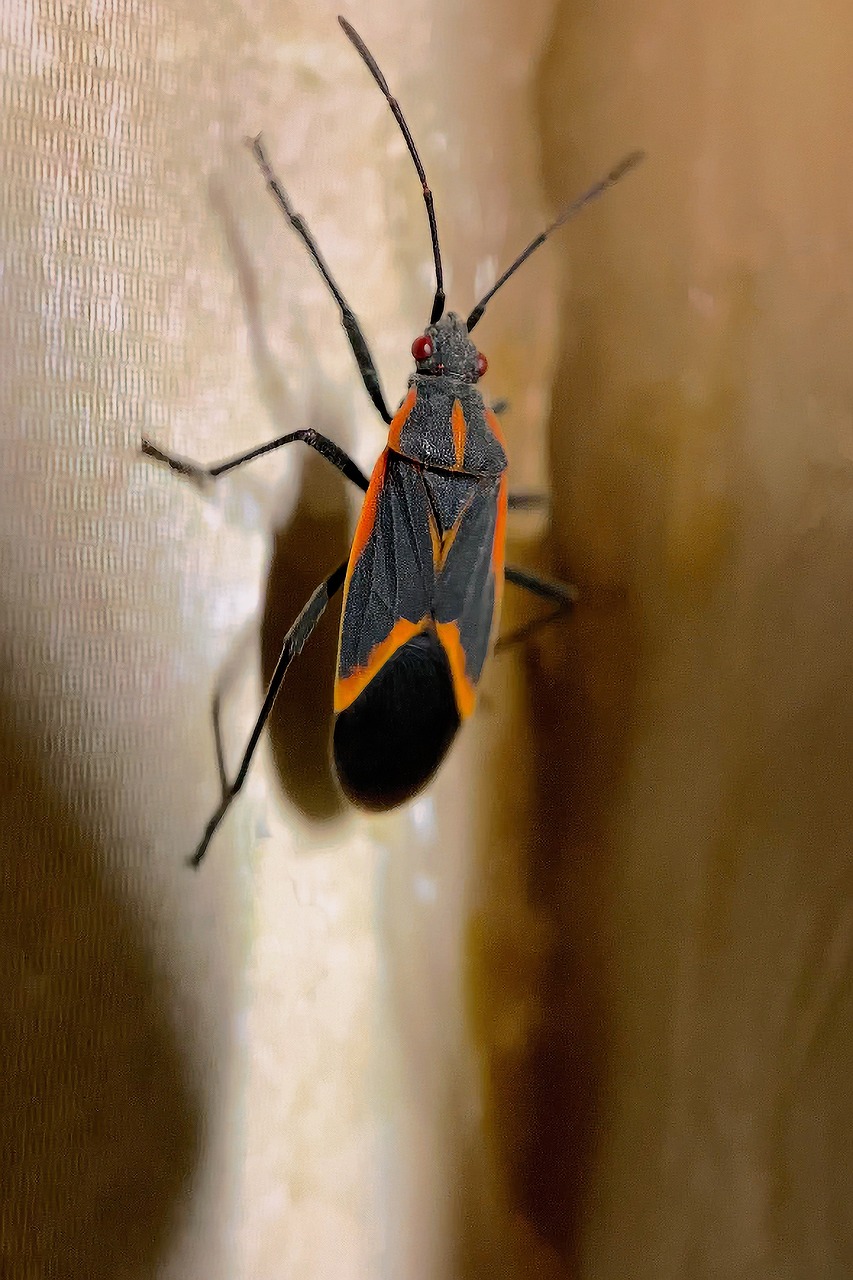
Daylight Savings time has ended, and it is time to ‘fall back’ once again. Fall brings about cooler temperatures, changing leaves, and boxelder bugs and other home invading pests by the millions. Find out what you can do to help keep these pests from invading your home.
Proper identification of the insect will ensure the proper control method. Boxelder bugs are black and orange true ‘bugs’ that can be found in large numbers around foundations sunning themselves or trying to find their way inside. Multicolored Asian Lady Beetles are the orange ‘lady bugs’ with black spots. Their distinct smell and ability to bite makes them even more of a nuisance once inside the home. Millipedes are often misidentified as ‘wire worms.’ These skinny, brown critters have two legs per body segment and will curl up when disturbed. Crickets hop their way into homes and provide ‘music’ in the night with their chirping. Commonly it’s the black field cricket that migrates inside, but there are others that follow right behind.
Depending on where you grew up, the boxelder bug can have many names. Some of the more common ones include maple bug, populist bug, and politician bug. Regardless of what you call them, they are annoying to say the least. The boxelder bug gets one of its common names from its primary host plant, the female boxelder tree. They can also be found on ash, and maple, and occasionally feeding on strawberries, grasses and other plants. The adults are ½ inch long red with black coloration under their wings. This time of the year they begin to cover the south and west sides of homes and try to make entry inside any way possible.
Wolf spiders may look scary, but they are more bark than bite. These large, hairy spiders can be found both outdoors and occasionally inside the home. They are not poisonous, nor do they want to disturb people. They are hunting spiders, so they don’t spin a web or a trap, but prefer to chase down their prey. They often find their way into homes in the fall following their favorite food source, the cricket.
The saying “an ounce of prevention is worth a pound of cure” has never been truer. Discouraging occasional invaders from entering the house is going to take a little work, but it will be worth it in the long run. Start by finding and sealing up any cracks or spaces they could enter through with silicone caulk or expanding foam. Make sure that window screens are in good repair and that doors are tight fitting. Also remove any dead plant debris from window wells.
Pests can be discouraged from entering the house in several ways. The most common way is by applying an outdoor perimeter insecticide treatment. These insecticides are labeled for various pests and often have residual effects to help protect the house for longer. Read and follow the label instructions on how and where these products should be applied. Ideally, try to apply these insecticides out from the foundation about five to ten feet around the perimeter of the home. The insecticides will help to decrease the number of pests that make it inside the house, but don’t expect it to stop all of them.
Monitor the home regularly to see what pests have made their way inside. Glue boards are sticky boards used to catch and hold pests as they try to move throughout the home. Be sure to use sticky boards in locations where non-target animals, like pets, won’t get stuck in them. If something other than the target pest does happen to get ‘caught’ in the trap, use an oily material, like vegetable or mineral oil, to dissolve the sticky substance on the trap. When properly placed, these traps will allow you to see which pests are inside the home and their approximate numbers.
Once pests are found inside the home, there are a few techniques that you can use. The handy broom and dustpan or the vacuum are two techniques; they are also very environmentally friendly and very cost effective. Be careful if you select insecticides for use inside the home. Read and follow instructions carefully as many of these products must come into contact with the insect themselves and don’t offer much residual protection.
With a little prevention and monitoring you can ensure that you are sharing your home with wanted house guests this fall and winter.
Elizabeth Exstrom is the Horticulture Extension Educator with Nebraska Extension in Hall County. For more information, contact Elizabeth on elizabeth.exstrom@unl.edu, her blog on https://huskerhort.com/ or HuskerHort on Facebook and Twitter

 Husker Hort