
This year has been a tough one on our landscapes. The fluctuating temperatures this winter caused death and dieback in euonymus and willow. Then the prolonged cool, wet spring has brought about fungal infections including ash rust and cedar/apple rust. Now a bacterial infection is rearing its ugly head in apple, crabapple, and their relatives. Find out what fire blight is, the symptoms to be on the look-out for, and what can be done to trees once infected. Continue reading
Tag Archives: Nebraska Extension
Wildflower Week 2015
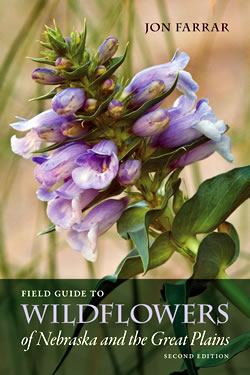
A great resource that helps to identify wildflowers.
Wildflower Week is in full bloom. What exactly is Wildflower Week and what is a wildflower? Wildflowers and native plants are very versatile plants that have multiple benefits in the landscape. Some wildflowers are a cut above the rest and are worth a try in your garden. Continue reading
Research Before You Retweet: Gardening in the Age of Social Media
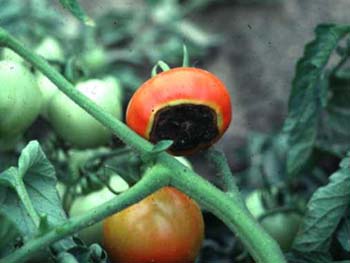
Blossom end rot on tomato. Maintain consistent moisture. Try mulching tomatoes instead of reaching for the Epsom salts.
Without a doubt the interest in gardening and landscaping has been on the rise for many years. In order to find information on how to garden in the past, you had to know who to ask or what book to look in. Today the places to find information are endless. Continue reading

The War on Weeds
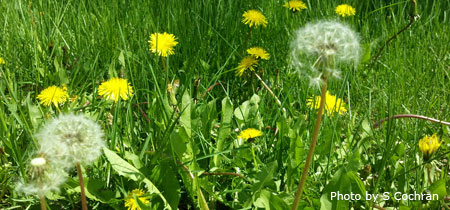
Dandelions
Spring has officially sprung. The crabapples and flowering pears are in full bloom. Tulips and daffodils are starting their flower show. Henbit and dandelions are looking gorgeous. Are the last two not quite the kinds of spring flowers you want in your landscape? If so, there are some things you can do. The key to knowing what to do when depends on the weed, but it all comes down to proper identification of the enemy and its life cycle. Continue reading
My Seed Starting Project
 Don’t let the idea of starting your own transplants scare you off. Starting your own transplants can be a rewarding experience as long as you follow a few simple rules and have the proper equipment. Continue reading
Keeping Evergreens Ever Green
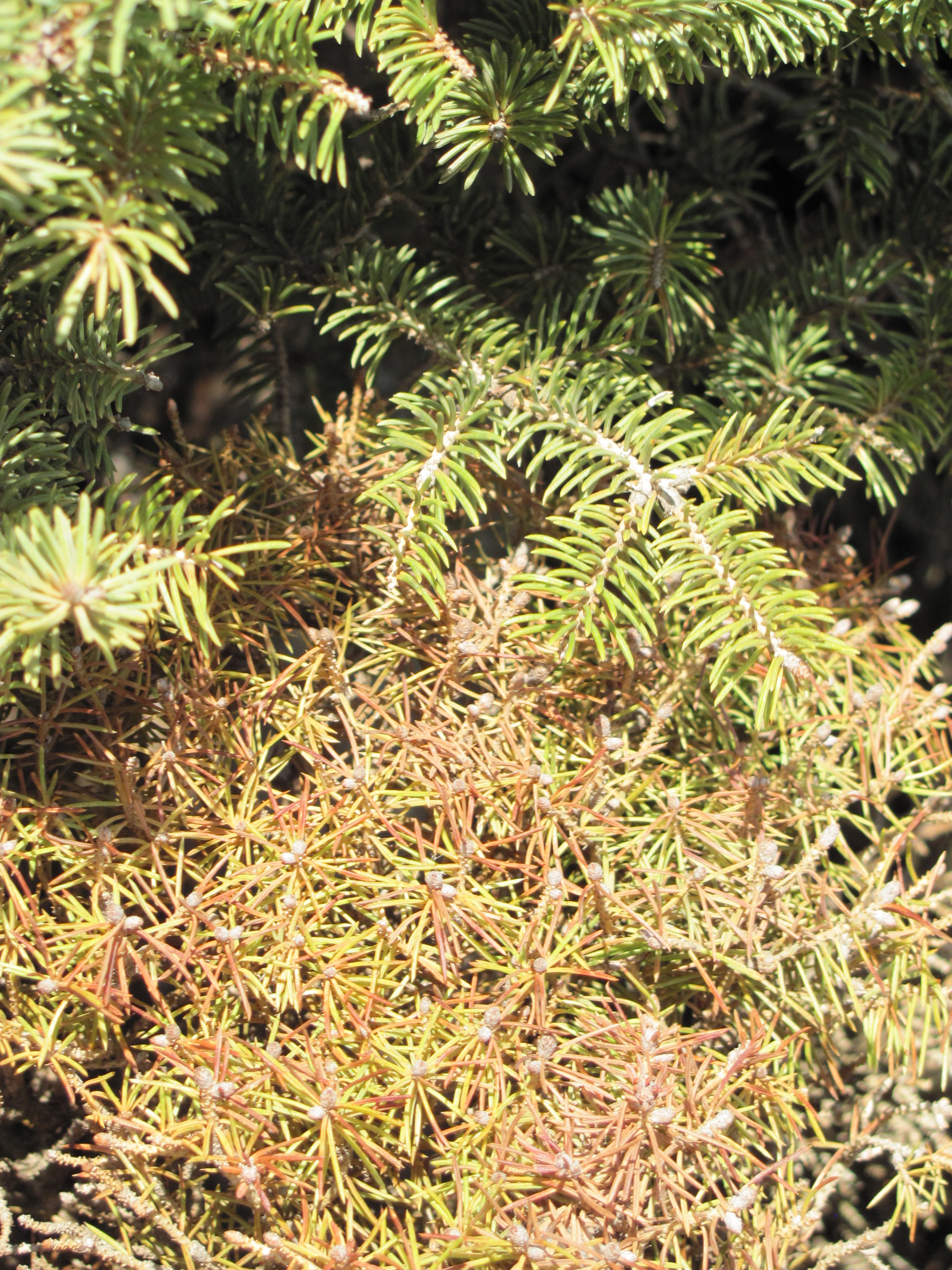
Winter Desiccation Damage on Dwarf Alberta Spruce
Good-bye to 2014 and hello 2015. It’s been an exciting year. Above average moisture this spring and summer had most of our trees full with leaves and fruit and our gardens bursting with produce. With this year coming to an end, do you know what it takes to make sure your evergreen trees and shrubs stay in good spirits into the New Year? Continue reading
Don’t Eat That!! Holiday Plant Edition
The holiday season is upon us. The cookies are baked, the decorations are up, and the holiday plants are blooming with all of their glory. Some of our favorite holiday plants have a potentially dangerous side and can do more than just add color to our homes.

Mistletoe photo courtesy santarosa.ifas.ufl.edu
According to the Nebraska Regional Poison Center, plants were one of the top ten non-drug substances for human exposure in 2013. Do you think you know which of your holiday plants are safe and which ones are dangerous?
Amaryllis is near the top of the list for forgotten poisonous holiday plants. These plants are one of the more poisonous plants that are brought in during the holiday season. Amaryllis are often sold during the holiday season as a large bulb. Once these bulbs are watered, they produce long strap like leaves and a flower stalk containing brightly-colored, trumpet shaped flowers. The toxic chemical that these plants contain is called Lycorine. The most toxic part of these plants is the bulb. The other parts of the plants can also be toxic if they are eaten in large quantities.
Kissing under the mistletoe sounds like an innocent- enough holiday ritual. Try researching the many meanings of this holiday tradition just for fun. Real mistletoe is a common holiday plants that is sold dried in small packages to be hung in homes. The plant has green leaves and white berries and is a parasite-like plant that feeds off of other trees. With some species, eating a few of the berries would produce mild gastroenteritis, acute diarrhea and vomiting. Want to rethink kissing under a poisonous, parasitic plant?

Poinsettia
Another holiday plant gets a bad reputation for being extremely poisonous, the poinsettia. According to research, they are not considered poisonous. According to the POISINDEX, the primary resource used by most poison control centers, a 50 pound child would have to eat more than 1.25 pounds of colored poinsettia bracts, about 500 to 600, to exceed the experimental dose. That is not to say that there wouldn’t be some stomach upset or vomiting if some were eaten.
Looking for some completely safe holiday plants? The Christmas cactus and kalanchoe are two plants that are deemed non-poisonous by the Nebraska Regional Poison Center. The Christmas cactus has flat, fleshy stems that resemble leaf-like pads which are joined to one another in a chain-like pattern. The flowers are usually held at the tips of the stems or in the ‘leaf’ axils and are usually pink to red. The kalanchoe has semi-fleshy leaves and flowers that are held in umbels above the leaves. The flowers come in a wide range of colors including yellow, orange, red, and pink to name a few.
Regardless of the plant, resist the urge to eat them and just admire the perfect holiday plant this season.
Upcoming Programs:
Extension Master Gardener- Two training sessions will be held at the Nebraska Extension in Hall County meeting rooms in Grand Island. Session 1: Tuesday evenings, February 3 through March 10, 6:00 to 9:00 PM. Session 2: March 16, 18, 20, 23, 25, and 27 from 9:00 a.m. to 4:00 p.m. Please contact Elizabeth Killinger, 308-385-5088, prior to January 9 with which Extension Master Gardener training session you are interested in attended. More information, updated schedules, and a brochure can be found at http://hall.unl.edu
For more information contact Elizabeth Killinger at ekillinger2@unl.edu, 308-385-5088, on Facebook, Twitter, her blog at http://killingerscollection.wordpress.com/, or visit the University of Nebraska-Lincoln Extension website: hall.unl.edu.
Fall Turf Care
*This post was written BEFORE a majority of the state received snow 😉
Fall is good for more than just raking leaves and cooler nights. Fall is actually one of the better times of the year to improve your turf. Take advantage of these cooler temperatures and prepare your lawn for the coming spring.
The first question to ask yourself this fall is; can you see your turfgrass in the lawn? Heavy layers of leaves can do a few things to your lawn. If they are thick enough, leaves can smother the lawn and also create conditions that can be favorable to snow mold. Raking or mowing the leaves on a regular basis can help to prevent this heavy layer of leaves from forming and matting down on the turf before winter. If the leaves aren’t utilized in the compost pile or worked into the garden soil, they can simply be mowed over. Using the mulching blade on the lawn mower will chop up the leaves into smaller pieces that are able to filter down between the grass blades. This helps keep you from having to haul the leaves away and it also helps to add organic matter back into the soil. By removing or mulching the leaves on the lawn, you can ensure that your high quality winterizer fertilizer will be able to filter down to the soil where it can be used by the turfgrass, rather than sitting up on top of the leaf litter.
Good news. There is still time to control pesky perennial weeds. The ideal season to control perennial weeds like ground ivy, also known as Creeping Charlie, was between September 15th and the first frost, but there is still time. Research out of Purdue shows that herbicides that contain triclopyr, like Turflon, were effective on ground ivy and retained their effectiveness when applied later in the season regardless of the first frost. The study showed that broadleaf applications should be effective when made into the first week or two of November, but control might be not be seen until spring.
It may be time to rethink what you knew about winterizer fertilizer applications. Previously, recommendations were to apply nitrogen during early to mid-September and then make a heavy application of nitrogen fertilization at the end of the growing season (early to mid-November). Research has shown that nitrogen fertilizer uptake is not as efficiently used later into the fall. Fertilizer that isn’t taken up by the plant sits in the soil until the following spring or is leached out of the soil profile during winter. Avoid applying fertilizer too late into the fall. September fertilization is best to maximize recovery from summer stress and prepare for winter. For the last application of the season, apply it no later than the first week of November and aim to apply not more than 0.75 lb. of a fast release nitrogen source.
With a little time and effort now, your lawn can still look green and lush next spring and hopefully with a few less weeds too.
For more information contact Elizabeth Killinger at elizabeth.killinger@unl.edu, 308-385-5088, on Facebook, Twitter, her blog at https://huskerhort.wordpress.com/, or visit the University of Nebraska-Lincoln Extension website: hall.unl.edu.
 Husker Hort